The Influence of Fujian Boxing Systems on Kyusho Jitsu
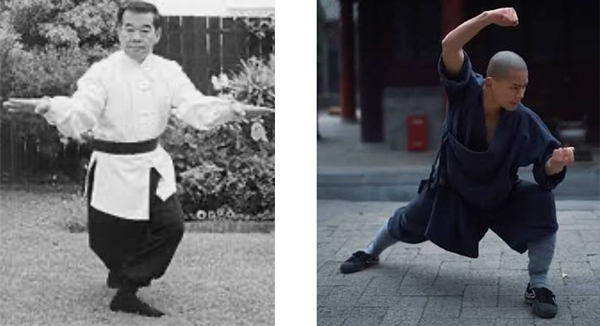
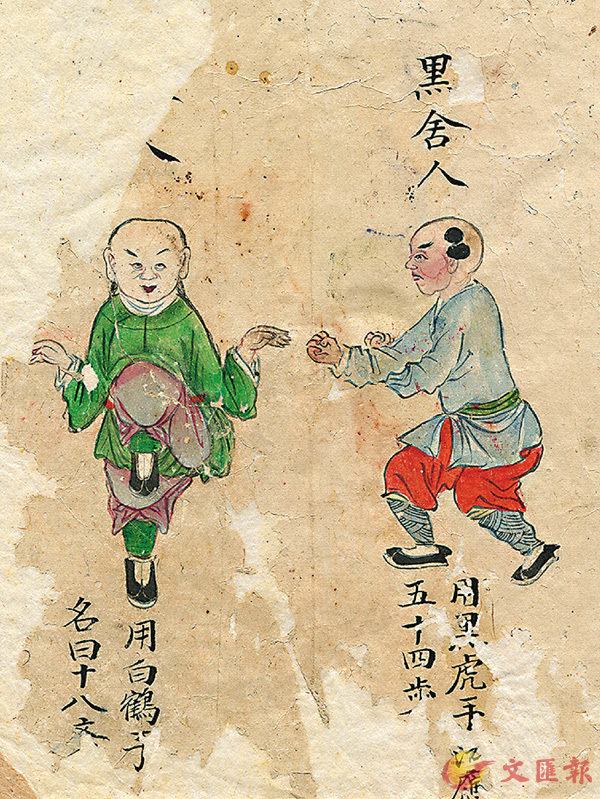
It’s clear that Fujian Southern Fist Boxing (Fujian Nanquan) share very similar techniques to Okinawan Karate, including common kata such as Chinese versions of Sanchin Kata. The Bubishi presents a brief history of the legend of the origins of Fujian White Crane Boxing (Baihequan) and a comparison of White Crane and Louhan (Luohanquan) or Monk Fist Boxing.
The 48 fighting techniques illustrated in the Bubishi are thought to have been heavily influenced by Louhan/White Crane boxing.
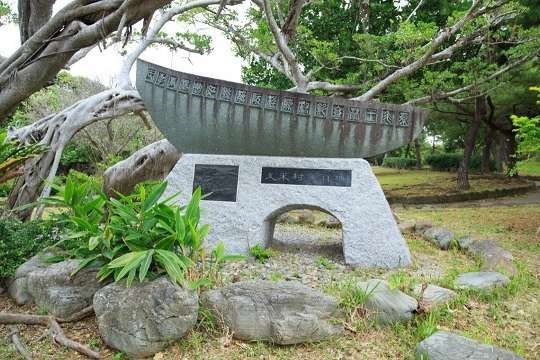
Kunemura village was an important centre of Chinese culture within the former Ryukyu Islands. It became the area of settlement for a Chinese diplomatic exchange that included the ‘36 families from Min’. A group of bureaucrats and craftsmen who emigrated from Fujian province in Southern China. to the Ryukyu Kingdom in 1392, under the orders of the Ming Chinese Emperor.
Members of this Chinese diplomatic mission established important political roles within Shuri, the Ryukyu capital, and carried out key diplomatic functions between the Ryukyu Kingdom and China, Japan and other important Ryukyu trading nations situated around the trade routes with the Ryukyu Islands.
Part of this cultural exchange included the introduction of Fujian martial arts to the indigenous Ryukyuan fighting art of Te. Gradually Fujian methods were absorbed into Ryukyuan Te, becoming the basis for Toudi or ‘China Hand’ system, and the boxing system which emerged around Kunemura Village became known locally as Kunemura-Te.
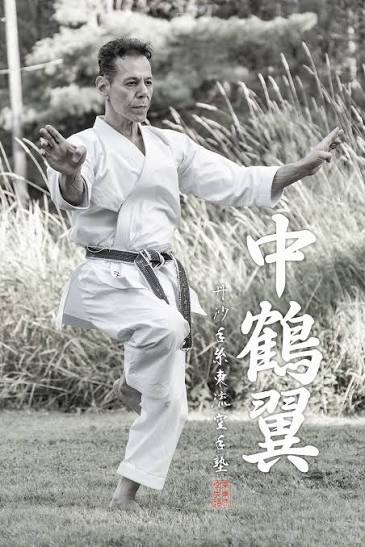
One of the katas that Kunemura became known for was an advance kata known as Kunemura Hakutsuru (Kunemura White Crane).
Kunemura Hakutsuru Kata was considered a high level, advanced kata within Kunemura-Te. It features interesting hand techniques such as Kete (Crane Wings), Tatou (Reversing Hand), Koken Uchi (Top of Wrist Strike), Kakuto/Ko-uke Crane Wrist) and Boshi-Ken (Thumb Fist), all designed to attack the vital points of the human body and being Chinese in origin, would have been based on the meridian system of Traditional Chinese Medicine featured in the Bubishi, at least originally, until the advent of Modern Western Medicine (MWM) into Japan in the 19th century.
The influence of Fujian White Crane is apparent in the Kunemura Hakutsuru, particularly the use of the distinctive Tsuruashi-dachi (Crane Leg) stance.
In his 1935 edition of ‘Karate Do Kyohan’ and in his 1914 article ‘Okinawa no Bugi’ Gichin Funakoshi (1868-1957) identifies three seminal Chinese figures, thought to be significant in the transition of Fujian boxing systems in the development of Toudi (Tode) on Okinawa.
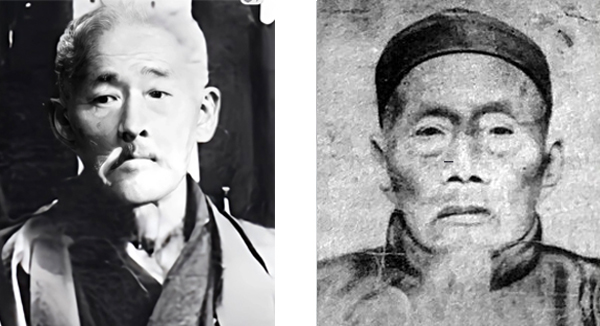
Ason, Iwah and Waishinzan held posts as Chinese military officers, or attaches, stationed in Okinawa during the 19th century. Originating from Fuzhou, they were prominent figures in teaching Fujian boxing systems around Naha, Shuri & Kunemura village. Funakoshi traces the influence of the Shorin & Shorei schools of Toudi, in part to Ason, Iwah & Waishinzan. Information which was passed down to him orally by one of his Toudi teachers, Anko Itosu (1831-1915).
Funakoshi doesn’t specify what Chinese boxing systems these Fujian boxing masters taught but it’s speculated that Ason & Iwah were White Crane boxing masters and Waishinzan a Louhan boxing master.
Both Ason & Iwah are considered to have taught Fujian Boxing methods to Soken Matsamura (1809-1899), generally considered to be one of the most important figures in the development of Okinawan Karate, and one of the most outstanding warriors of his era. Matsamura served as martial arts instructor and Royal Bodyguard (Shihan Yaku) to three successive kings of Sho dynasty (Sho Ko, Sho Iku, and Sho Tai) and was awarded the title Bushi (Warrior) by the Ryukyuan Royal Household in recognition of his unparalleled skills in martial arts.
Iwah was also an instructor to Isei Kojo (1832–1891), a descendent of the 36 Chinese families of Kunemura village, one of the three primary Royal Bodyguard families to the Ryukyuan Sho Kingdom, and third generation master of Kojo-ryu, one of the oldest family based Okinawan martial arts systems.
At age 16, Isei travelled with his father, Tokusho Kojo, to Fuzhou, China. He lived there for 20 years and studied with Iwah, becoming an assistant at Iwah’s dojo.
Isei’s son, Kaho (1849–1925), was born in China and eventually became a student of Iwah’s.
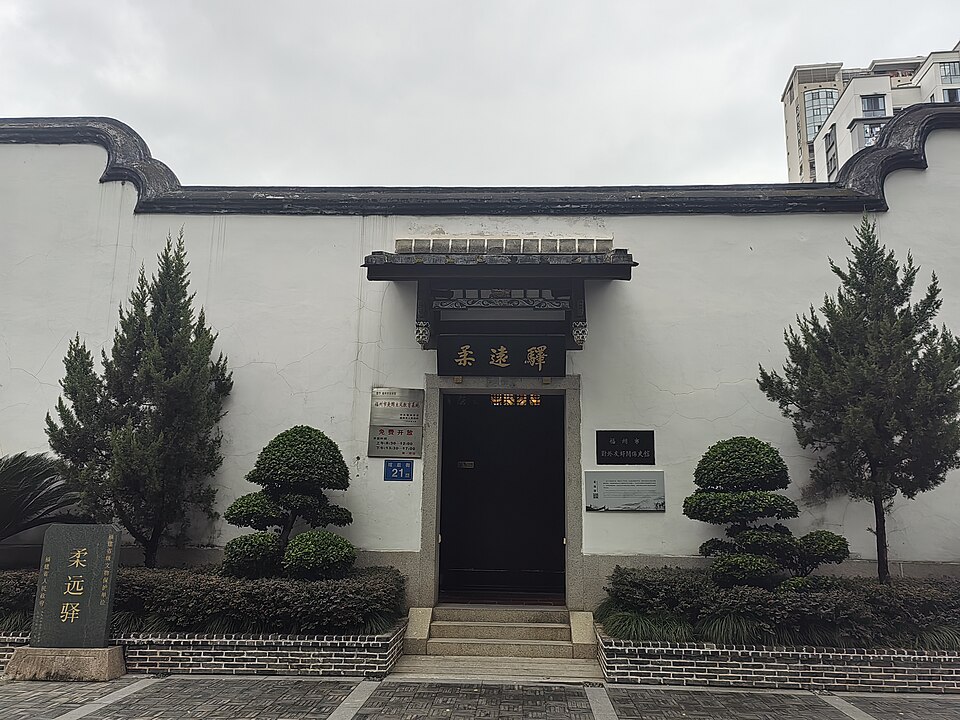
In 1874 after being granted independence from Iwah, Kaho Kojo opened a large dojo at the Ryukyukan, an Okinawan trading settlement in Fuzhou, which would become a significant link for disseminating Chinese martial arts into Okinawa.
Waishinzan is mentioned as a teacher of Seisho Aragaki (1840-1918), a notable figure in the development of Okinawan karate, who went on to teach many notable Okinawan karate masters including Kanryo Higaonna (1853–1915), an influential developer of the karate that emerged around Naha. Higaonna would go on to teach Chojun Miyagi (1888-1953), founder of Goju-ryu, Gichin Funakoshi, founder of Shotokan; Kanbun Uechi (1877-1948), founder of Uechi-ryu; Kanken Toyama (1888-1966), founder of Shudokan; Kenwa Mabuni, (1889-1952) founder of Shito-ryu; and Tsuyoshi Chitose, founder of Chito-ryu.
Kojo-ryu includes three ‘white’ animal katas including a Hakutsuru-ken or White Crane Fist kata, a Hakuryu-ken or White Dragon Fist kata and Hako-ken or White Tiger Fist kata.
Kanryo Higaonna, one of the early but significant Toudi teachers on Okinawa, travelled to Fouzhou to seek instruction in Southern Chinese boxing in 1879. At the Kojo dojo he encountered Wai Xinxian, one of the military attaches mentioned by Funakoshi in ‘Karate Do Kyohan’ and ‘Okinawa no Bugi’ and received instruction in Fujian White Crane boxing and Louhan Fist boxing. He later became the dedicated uchi-deshi (inner disciple) of Xie Zhongxiang (1852-1930), a teacher of Crying/Calling Crane (Minghequan) Boxing which itself is a hybrid of Southern Louhan and Crane boxing.
In Fouzhou, Higaonna also became a student of Ryu Ryu Ko (1793-1882), a nickname, most probably referring to Liu Long Gong, a military officer and bodyguard for the Chinese Sapposhi. He was also the chief instructor at the Royal Bodyguard School during the Qing dynasty and also thought to be a Fujian White Crane boxer.
Kanryo Higaonna would go on to teach a number of significant karate masters including Juhatsu Kyoda (1887-1988), (To’on Ryu) , Chojun Miyagi (Goju Ryu) & Kenwa Mabuni (Shito Ryu).
Higaonna is believed to have brought back a copy of the Bubishi from Fuzhou and possibly passed it on the Chojun Miyagi, founder of Goju-ryu.
Kaho Kojo also taught Kanbun Uechi, founder of Uechi-ryu, after he fled to Fuzhou in 1897 at age 19 to avoid Japanese military conscription and to study martial arts.
Uechi-ryu includes elements of Tiger, Dragon and Crane boxing derived from Chinese Pangai-noon boxing. The individual attributes of these animals are expressed through the three main katas of the Uechi-ryu system; Sanchin, Seisan & Sanseiryu.
Goju-ryu too, references various animals from the Chinese Zodiac within its 12 core katas. Certainly, Fukien White Crane has a version of Sanchin kata, a popular kata in the karate systems of both Goju-ryu & Uechi-ryu, both of which developed in Naha, an important trading port with Fuzhou in Southern Okinawa,
Fujian White Crane was a very prominent boxing system in Fujian province during the 19th century. It’s important to understand that Tuidi was an amalgamation of a pre-existing indigenous Okinawan fighting system and multiple sources of influence from Chinese, and even Japanese, fighting systems.
Boxing systems change as they’re passed down generation by generation and different instructors adapt fighting methods to suit their own personality and physical characteristics or modify their teaching based on their students’ physical characteristics.
In Funakoshi’s 1956 autobiography ‘Karate-Do: My Way of Life’ Funakoshi is quoted as saying:
‘The Karate that high school students practice today is not the same Karate that was practiced even as recently as ten years ago, and it is a long way indeed from the Karate I learned when I was a child in Okinawa’.
Many Chinese boxing systems would have underdone similar changes. Many Southern boxing methods were themselves adaptations of older systems. Comparisons between modern versions of White Crane or Louhan boxing with modern Okinawan Karate systems is a denial of the many years of adaption and modification that would have taken place between the transmission of southern Chinese boxing systems and their integration into Okinawan Te and the multiple influences that subsequently played a part in what we understand today as Karate.
It’s clear that the Kojo dojo at the Ryukyukan in Fuzhou, acted as an exchange for Southern Chinese Boxing systems, which during the 19th century, were heavily influenced by White Crane boxing.
A close study of Okinawan Karate kata reveals references to traditional Chinese animals other than White Crane.
This suggests that the Okinawan kata were created from multiple sources of Fujian Boxing systems rather than White Crane alone. Indeed, the term used on Okinawa is Hakutsuru Ken or White Crane Fist suggesting an influence rather than a dominance of White Crane boxing on the development of Okinawan Karate.
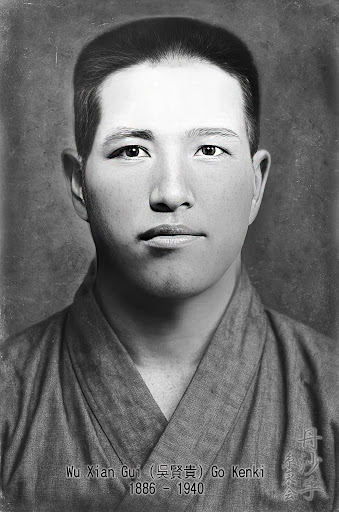
Two significant individuals in the transmission of Fujian boxing systems to Okinawa were Wu Xian Gui (1886-1940), known in Okinawa as Gokenki (or Go Genki) & Tang Daizi (DOB & Death unknown).
Gokenki was a Fujian White Crane boxer and Tang Daizu proficient in Tiger Fist & Crane Fist (likely a form of Louhan boxing) which emphasised a form called Shisan Daihao (‘Preserving the Great Thirteen’) thought to be a version of Seisan Kata.
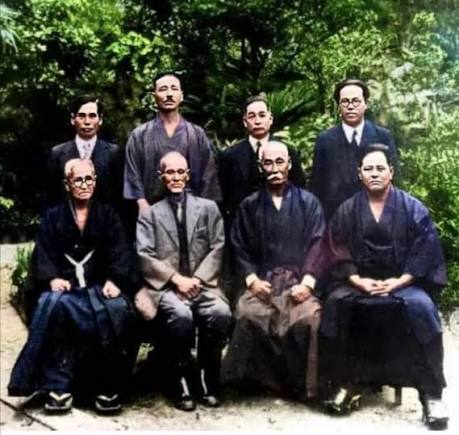
Gokenki ran a tea shop, the Eiko Koucha, close to Matsuyama Park, in Kunemura Village, and would teach White Crane boxing near the Naminoue Shrine (Naminoue Jingu) where the Okinawa Karate Research Club (Ryukyu Tode-jutsu Kenkyukai) had its headquarters. Gokenki & Tang Daizu became friends with Chojun Miyagi & Kenwa Mabuni and other active members of the Ryukyu Tode-jutsu Kenkyukai.
The Kenkyukai was originally founded in 1918 in Naha by Chojun Miyagi and Kenwa Mabuni and was based in Mabuni’s home. By 1926, the Kenkyukai had become a large, full-time association with its own training facility located in the Wakakusa district of Naha.
Besides Miyagi and Mabuni, members of the Kenkyukai included Chomo Hanashiro (1969-1945), Kentsu Yabu (1866-1937), Choki Motobu (1870-1944), Genwa Nakasone (1895-1978), and a number of other famous Toudi teachers.
Gokenki is said to have been the source of the katas Happoren/Paipuren (a more advanced version of Sanchin which translates as ‘Eight Continuous Steps’), Hakucho, Haffa, Hakutsuru, Hakkaku and Nipaipo/Neipai.
Kenwa Mabuni learned Papuren (along with Nipaipo and Haffa) from Gokenki, subsequently incorporating it into his Shito-ryu karate system.
These kata, with variations, have found their way into a number of Okinawan Karate styles, which demonstrated the significance perhaps, of Gokenki and White Crane boxing to the Okinawans.
Both Gokenki & Tang Daizi participated regularly in public demonstrations of karate on Okinawa with the Ryukyu Tode jutsu Kenkyukai throughout the 1920’s.
Chojun Miyagi made three trips to China to research the Chinese origins of karate.
The first of these trips he made in 1915, accompanied by Eisho Nakamoto (1881-1945). Miyagi travelled to Fuzhou, China, during the trip he visited the grave of Ryu Ryu Ko (thought to be Liu Long Gong), one of the teachers of his own master, Kanryo Higaonna. He remained in Fuzhou for two months and trained with local Chinese boxing masters including a former student of Ryu Ryu Ko.
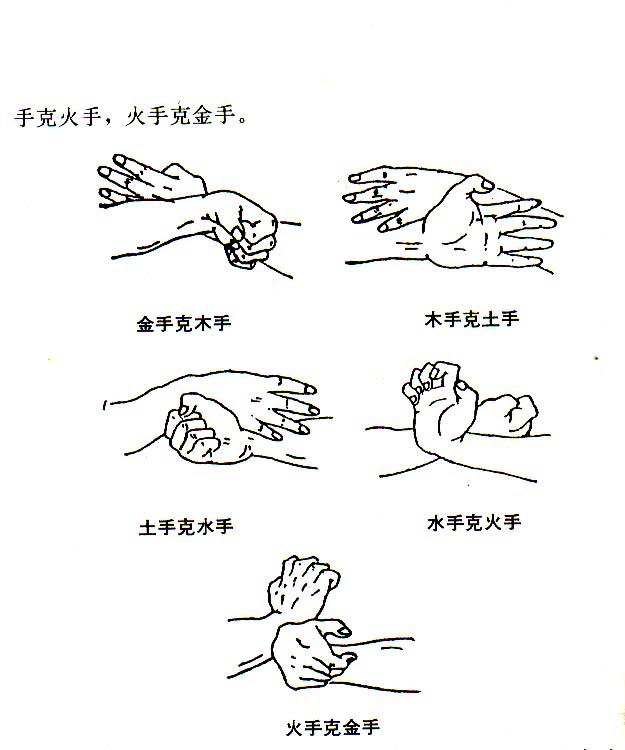
His second trip he made in 1917, again to Fuzhou, accompanied by Gokenki. During this visit, he studied local styles, including white crane boxing. He brought back the kata Rokkishu (Six Hands), which was instrumental in his creation of Tensho kata. Rokkishu is thought to be related to the ‘6 Ji Hands’ described in the Bubishi. Designed to attack the ‘blood gates’ of the body, the 6 Ji Hands are considered a Dim Mak technique. Rokkishu is based on the Five Element Theory (Wu Xing). Each hand rotation depicts the changes in the Five Elements as follows
- Fire hand overcomes Metal hand.
- Metal hand overcomes Wood hand.
- Wood hand overcomes Earth hand.
- Earth hand overcomes Water hand.
- Water hand overcomes Fire hand.
Most of these techniques have all but disappeared from modern sports-based karate, which is why the preservation of kata is so important.
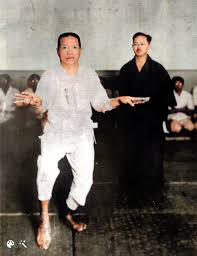
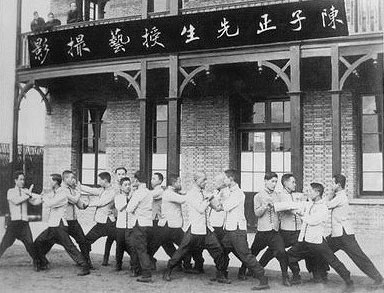
Miyagi made his third trip in 1936, this time to Shanghai, again accompanied by Gokenki. During this trip, he researched, taught and demonstrated karate to Japanese residents. Miyagi visited the Jingwu Athletic Association where Go Kenki introduced him to the famous Luohan Quan monk master Miao Xing (1881-1939), with whom he trained with for some months, along with other Chinese Boxing masters there.
It’s clear that China, in particular Fuzhou in Fujian Province, held significant importance to the development of Okinawan Karate.
At the heart of Fujian boxing systems, is Traditional Chinese Medicine (TCM) and the meridian system. Much of this knowledge would certainly have found its way into the Ryukyu Islands prior to the Meiji restoration when the adaptation of the German Medical system replaced TCM in 1868 and western anatomical terminology became the de facto system for classifying anatomical features in the national medicine curriculum across Japan and its prefectures, which included Okinawa.
The Bubishi is confirmation that this knowledge would have found its way into the hands of early Toudi practitioners of the late 19th century.
Within the Kyusho Jitsu Kenykukai, we recognise the influence that Southern Chinese Nanquan systems had on both the transmission of Kyusho Jitsu and the development of karate. When we can find instructors, practice of Fujian boxing systems is considered an important aspect of the research and study of Kyusho Jitsu.