Kyusho Jitsu and the Energy Connection
Inevitably, anyone studying Kyusho Jitsu will come into contact with abstract terms and definitions about mysterious energy connections know a as Chi (Qi) or Ki. This relates to a conceptual model of an interconnected universe from Taoist philosophical concepts such the Five Elements, Meridian Circulation and Yin/Yang (In/Yo).
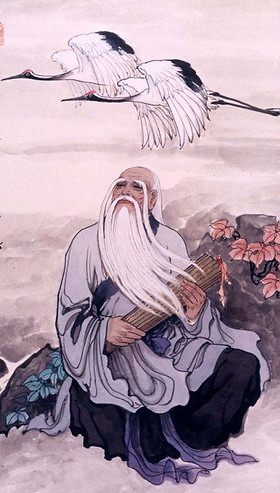
Taoism is a religious/philosophical belief system which has roots to the Chinese philosopher Lao Tzu, who, around 500 B.C.E., wrote the main book of Taoism known as the ‘Tao Te Ching’ or ‘The Book of Changes’, considered one of the oldest Chinese Classical texts.
Taoism profoundly shaped Chinese culture, influencing medicine, art, poetry and philosophy, and today is considered one of five religious doctrines officially recognised by the Chinese government. It is a belief system and conceptual model based on the harmony of the universe and man’s place within it. Taoism together with Confucianism and Buddhism, form the three pillars of traditional Chinese culture.
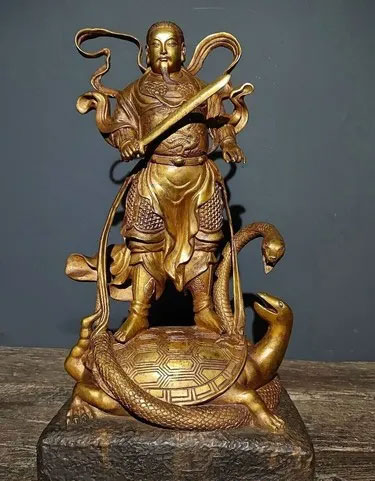
During the Ming Dynasty, Taoism established itself in the Wudang Mountains in Hubei, China, to honour the deity Xuan Wu, the ‘Mysterious Warrior’ who represents power and protection.
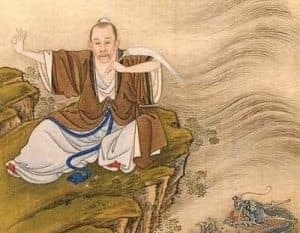
Legendary Taoist immortal and semi-historical figure, Zhang Sanfeng, thought to have lived at some point between the late Southern Song/early Yuan Dynasty and the early Ming Dynasty (roughly the 13th to 15th centuries), is often credited as the founder of Tai Chi Chuan (Taijiquan) and Neijia (internal) martial arts.
Unsurprisingly, a strong martial tradition developed around Taoism and the Taoist monasteries and temples in the Wudang Mountains which resulted in the development of Chinese Internal Martial Arts including Taijiquan (Tai Chi Chuan), Bagua (Pa Kua) & Xingyi (Hsing-I).
These Taoist boxing systems were heavily influenced by Taoist philosophy. They focused on the cultivating of Qigong (energy cultivation), relaxation, the concept of force re-direction and the development of internal power, rather than the reliance on brute force and muscular strength.
Taoist monastic culture combined these boxing methods with Taoist principles for cultivating health and spiritual development together with self-protection.
Taoism influenced Buddhism, which became established in China during the Han Dynasty in the 1st Century CE (around 68 AD). An interchange of cultural philosophies and practices followed. Naturally, this included Taoist boxing principles and methods including the spread of Qigong for health, spiritual development and martial applications.
The martial aspects of Taoist boxing methods have gradually been lost and today Taiji, Bagua & Xingyi are largely practiced for health and spiritual development. They’ve largely lost their Quan (fist) or martial applications.
It is this emphasis on the health and spiritual practice of Taoist boxing systems, including the practice of qigong, that the Kyusho Jitsu Kenkyukai believe has become responsible for much of the mysticism and abstract concepts that have drifted into the martial principles, and, by association, Kyusho Jitsu, which is considered a descendent art from Taoist TCM practices.
Today, qigong is recognised for its many health benefits, including the lowering of blood pressure and the massaging of the internal organs through the gentle stretching of muscles, tendons, arteries and nerves, and for its spiritual or meditative benefits, due to the slow, rhythmic movements which constitute qigong practice.
Practitioners of Kyusho Jitsu inevitably come into contact with qigong practice. Central to this practice is the conceptual model that is based on Chi (Qi) or Ki flow through the body’s meridian channels.
This often becomes misinterpreted as some sort of mystic, invisible, Jedi type power, that can be conjured up by will, rather than the reality that this is simply a conceptual model related to gentle physical and spiritual practice, based on fairly simple, common calisthenics.
In fact, at a fundamental level, qigong practice can be split into three distinct areas;
- Medical (Health) Qigong
- Spiritual (Meditative) Qigong
- Martial Qigong
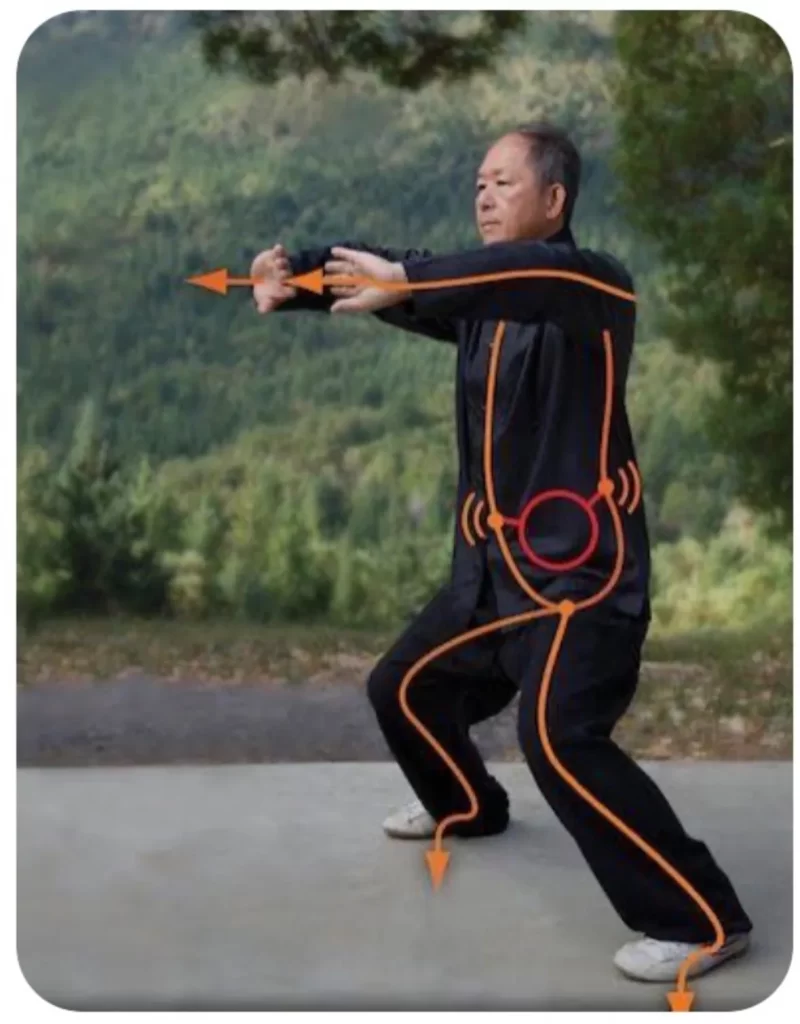
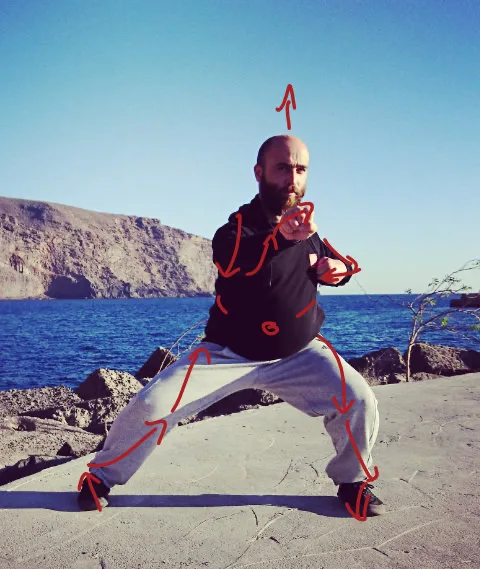
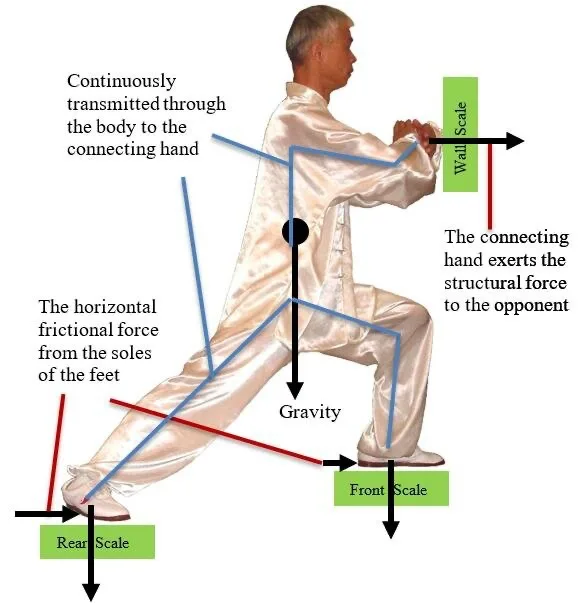
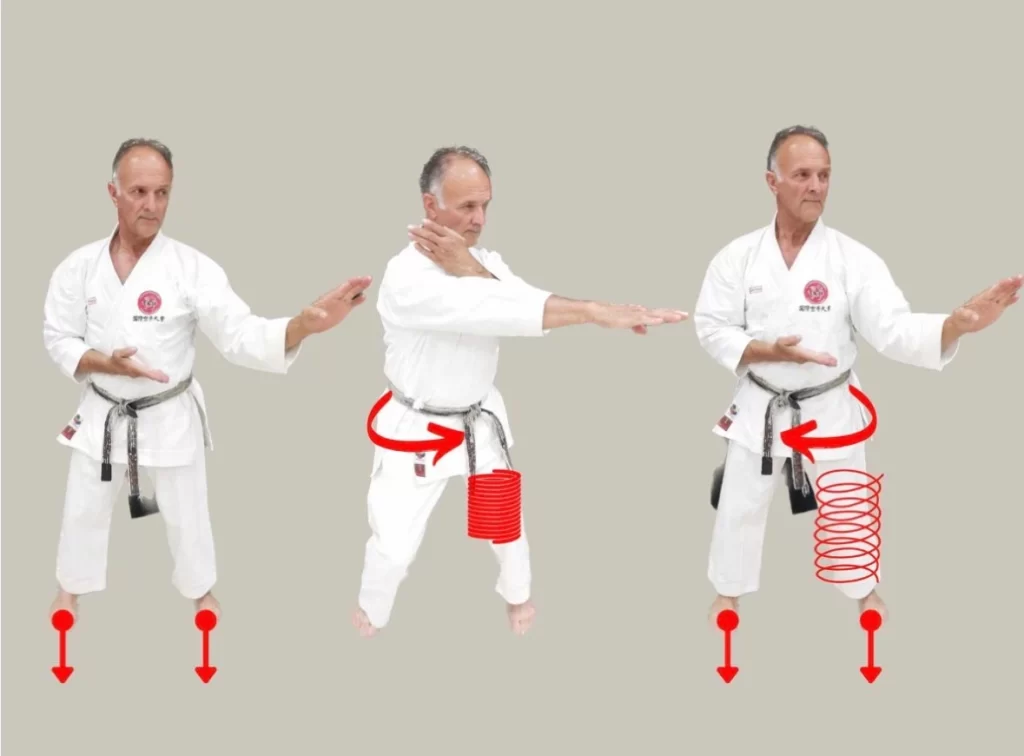
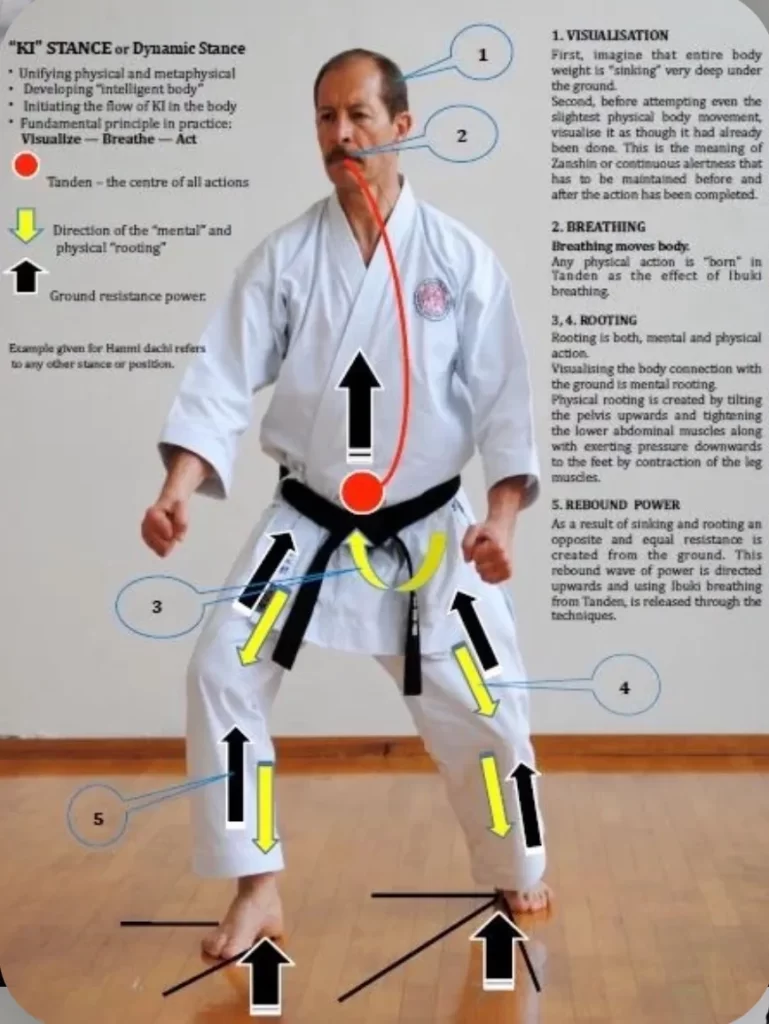
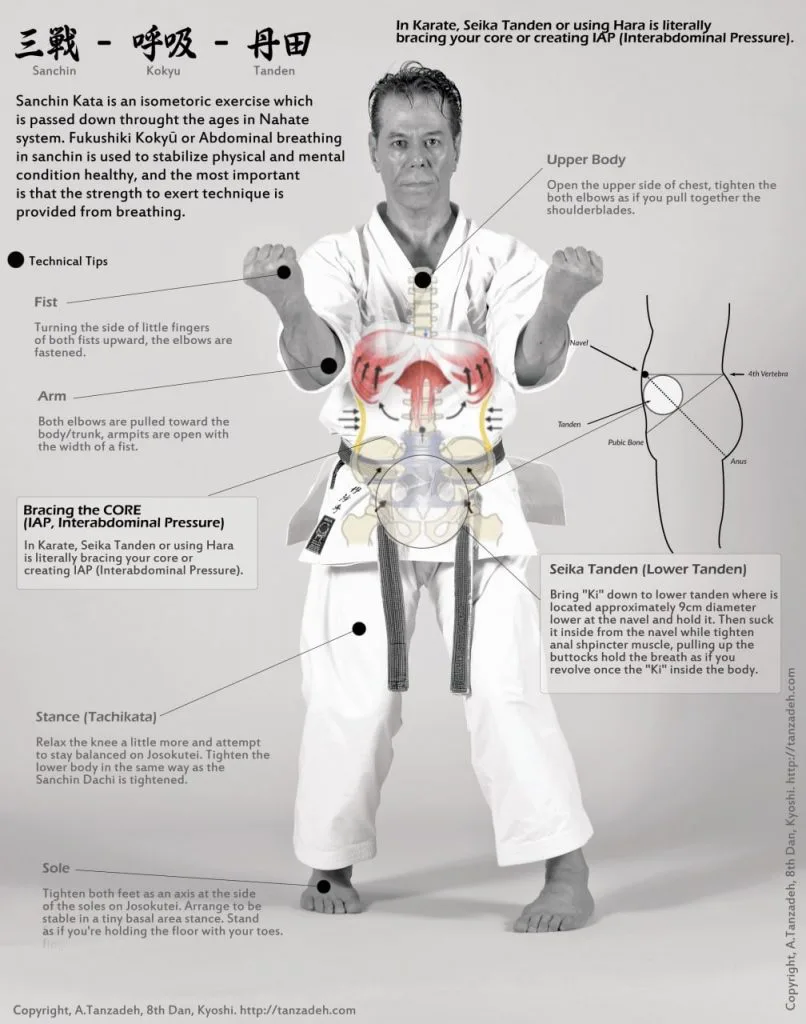
It is our opinion within Kyusho Jitsu Kenkyukai, that martial qigong is simply a system of understanding how to use the anatomical structure of the body to create power through breath control, expansion and contraction of the body, the flexion of the spine, the relaxation and tension of the muscles and the rotation of the body to generate kinetic energy capable of penetrative damage when applied against an opponent.
This type of energy development creates explosive power generation which is known in Neijia boxing systems as Jin. Jin is a highly specialised method of generating different types of energy such as explosive power (Fajin), short range power (Cun Jin), vibrating power (Dou Jin), elastic power (Peng Jin) and many others, all of which require specialist training to develop correctly.
In this respect, Kyusho Jitsu becomes much more than simply charting vital points on the human body. It’s about knowing how to correctly apply force effectively.
These same principles can be observed in most sports today, completely unrelated to any form of martial practice.
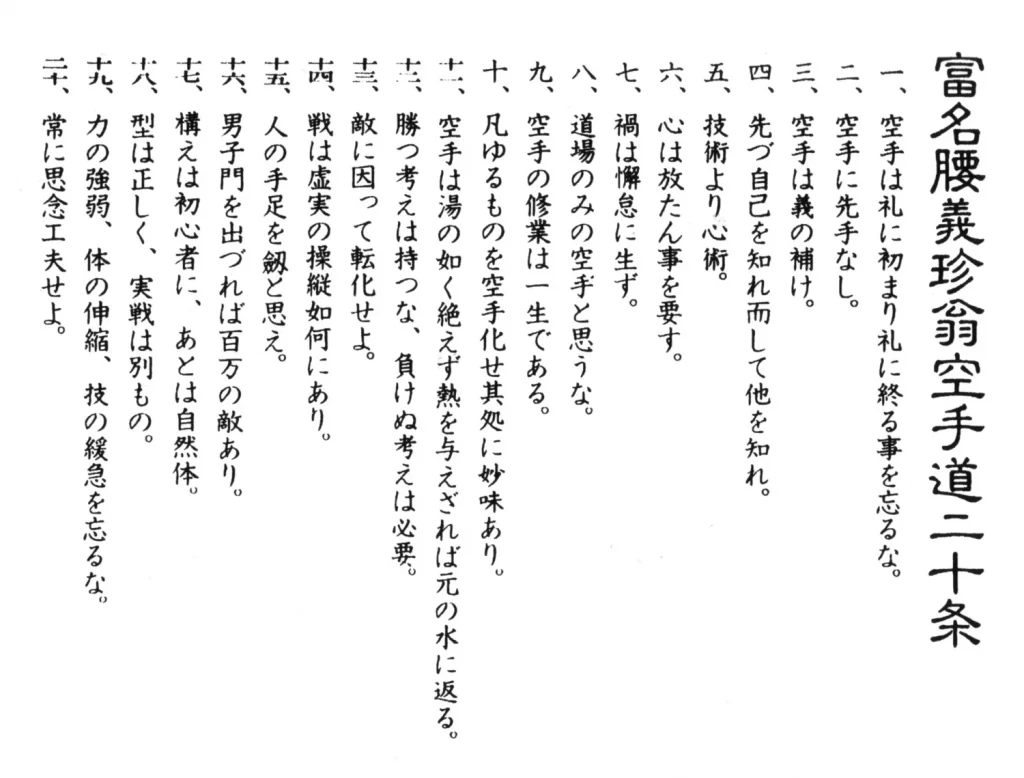
There is no doubt that early karate masters were aware of these principles for generating power. In fact, Gichin Funakoshi wrote in his 20 precepts or ‘Niju Kun’:
Do not forget:
- (a) Light and heavy applications of power
- (b) Expansion and contraction of the body
- (c) Slowness and speed of technique
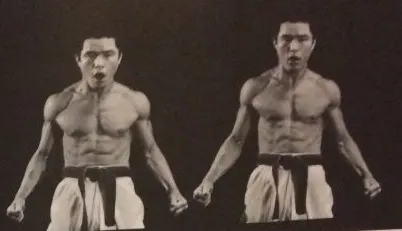
Karate breathing practice such as Kiai, Ibuki, Nogare and tension and relaxation principles such as Kime, Chinkuchi, & Koshi are all standard techniques for the application of power that demonstrate these principles.
These practices are preserved and taught through kata. They are inherent to kata practice and, in addition to many of the basic concepts of martial application, are the reason kata is considered the cornerstone of all karate practice.
Unfortunately, due to the increased focus on sport and competition and the obsession of the application of kata, many of these principles are becoming lost in today’s practice. This is one of the main reasons that kata remains the central aspect of practice within Kyusho Jitsu Kenkyukai.
Through the study of Chinese Internal Boxing methods such as Taiji, Bagua & Xingyi, these neigong (internal skill) methods of creating martial power can be rediscovered.
Kyusho Jitsu Kenkyukai therefore involves the study and research of Taoist boxing methods in order to learn how to correctly generate power by controlling the body and applying natural movement essential for understanding the connection between kyusho and energy creation.