The Revival of Traditional Japanese Medicine
Since 2001, Kampo education has been incorporated into the model core curriculum for all medical students in Japan.
There are an increasing number of clinical trials and scientific studies being conducted to establish an evidence base for Kampo, with research departments and outpatient clinics specialising in Kampo medicine established at many universities.
This revival is driven by consumer demand for natural, holistic treatments for chronic and stress-related conditions, government support through health insurance coverage, and scientific re-evaluation.
Kampo uses herbal formulas, acupuncture, and massage to restore balance in the body, often emphasising the individual’s symptoms and constitution to create personalised prescriptions that are considered to have fewer side effects than western medicine.
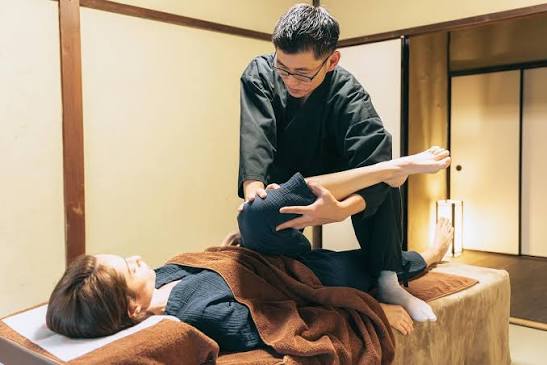
‘Tsubo’ points are Japanese terms for acupressure points or trigger points found along the body’s meridian channels. These points are considered sensitive areas where energy flow can be affected, similar to how they are in TCM. Tsubo points are used in practices like Shiatsu massage to stimulate or drain energy, potentially relieving a range of ailments.
It’s estimated that over 80% of Japanese physicians use Kampo formulas in their daily practice. Prescriptions are covered by the Japanese National Health Insurance, which has been a primary driver of its popularity and accessibility.
In our study of Kyusho Jitsu at the Kyushu Jitsu Kenkyukai, we adopt this same integrated approach to the study and research of pressure point techniques, combining modern western anatomical knowledge with traditional Chinese and Japanese methods studying both accupoint applications and nerve and anatomical targeting applications.