About Kyusho Jitsu
There is nothing more contentious in martial arts, as the subject of pressure points, their efficacy and legitimacy, yet they’re referenced in almost every classical martial arts book written in the early part of the 20th century and referenced in countless Chinese historical medical texts and old Japanese Densho scrolls.
Acupoints and Human Nervous System Anatomy
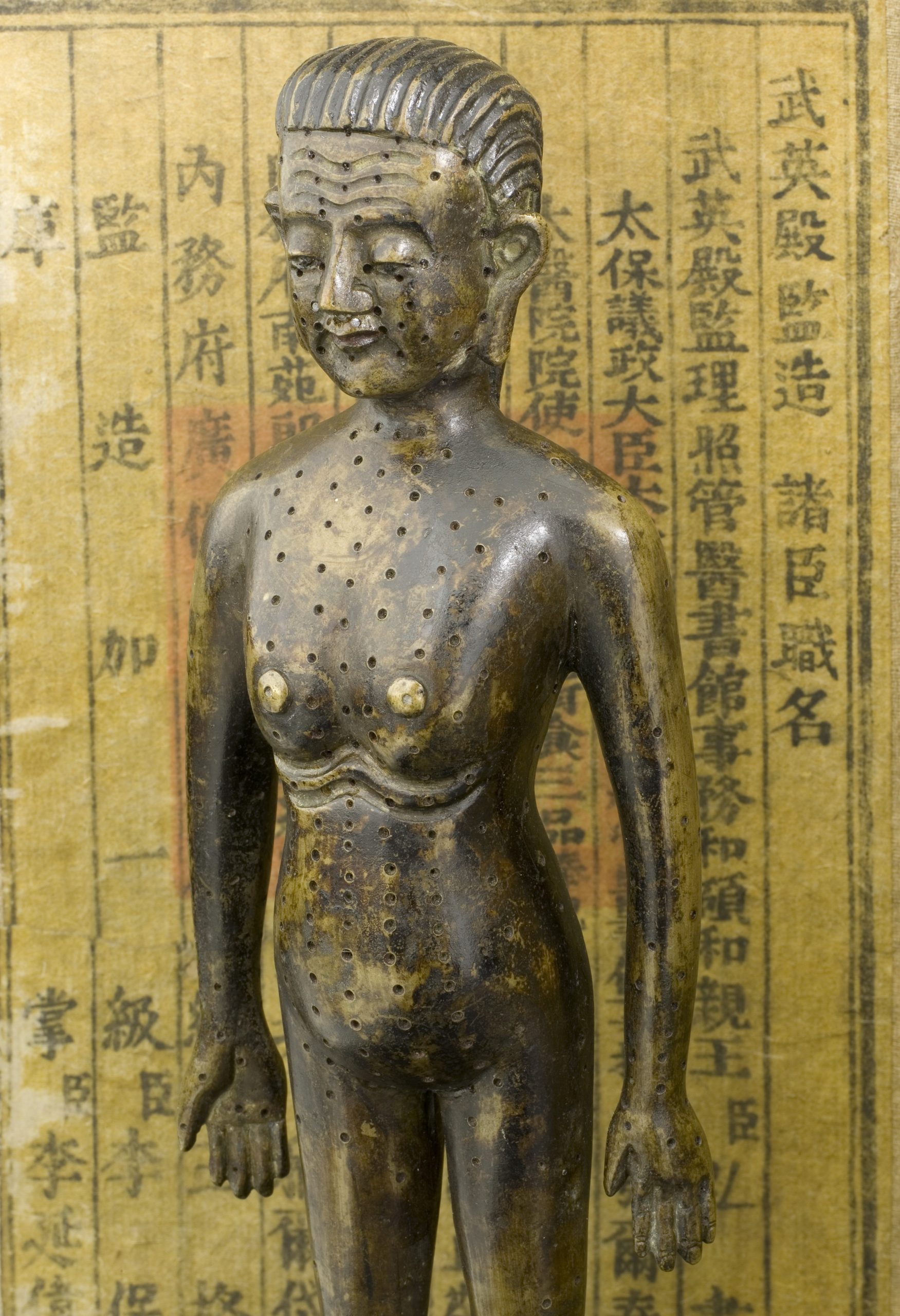
There are over 360 acupoints on the human body considered for martial application. Not all acupoints lie over nerves, nerve branches or nerve plexuses. Many researchers and practitioners of Kyusho Jitsu have attempted to map acupoints to specific nerves in the body in an attempt to explain the cause and effect of striking kyusho points by modern western medical science.
The Bubishi - The Bible of Karate
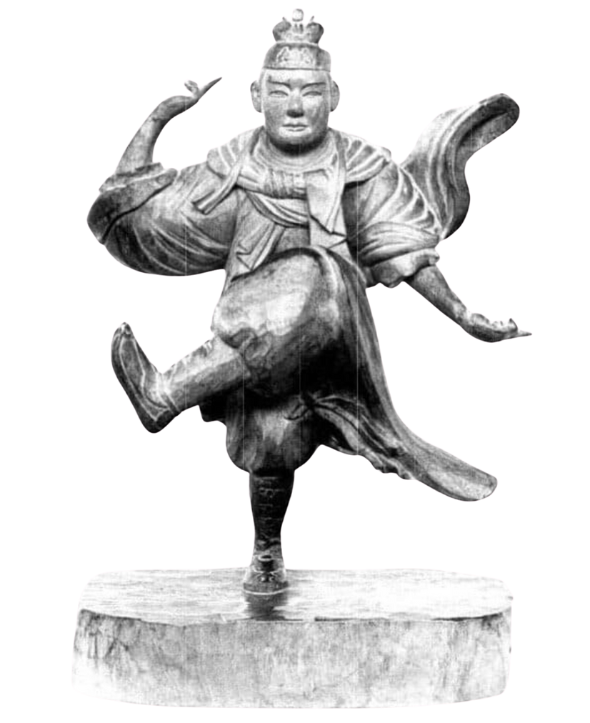
In terms of the written history of karate, perhaps the oldest martial reference we have is the Bubishi, a text of unknown origin, that was owned by prominent 19th century Okinawan karate masters. Written in the Fujian dialect it is a manual which highlights Traditional Chinese Medicine practices, the 36 vital points first identified by the Taoist monk Feng Yiyuan and details relating to the Shichen theory (Diurnal Cycle) of TCM and relevant information about the Southern Chinese boxing systems.
Kenwa Mabuni (1889-1952)
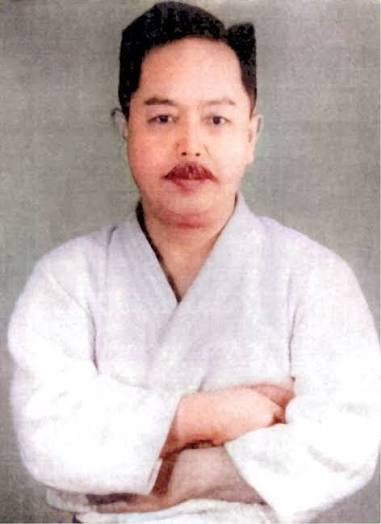
The Bubishi is referenced in Kenwa Mabuni’s 1934 book ‘Sepai no Kenkyu’ (The Study of Sepai) in which he references directly the 36 vital points chart used in the Bubishi.
The charts are thought to be based on the meridian charts first published by 14th century Chinese physician Hua Shou (1304-1386).
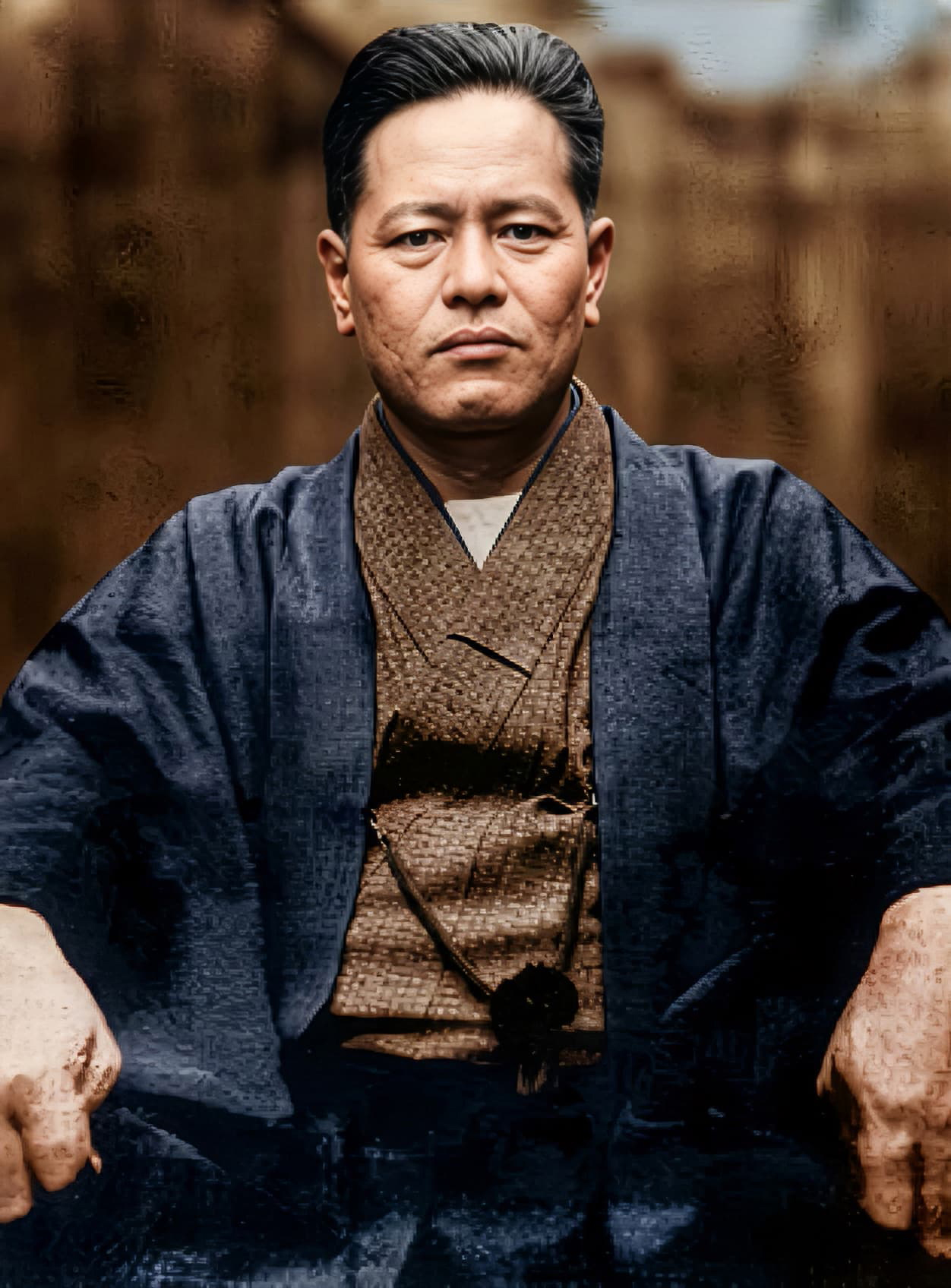
Chojun Miyagi (1888-1953)
Chojun Miyagi, the founder of Goju-Ryu karate, made three significant research trips to China (Fujian Province and Shanghai) between 1915 and 1936 to research the Chinese origins of karate.
During his second trip in 1917, Miyagi travelled to Fouzhou, accompanied by the Chinese tea merchant and white crane boxing master Gokenki. Miyagi studied local Fujian martial arts, including white crane boxing.
During this trip, Miyagi studied the chinese military manual ‘Wu Bei Zhi’ thought to be the original source of the Bubishi.
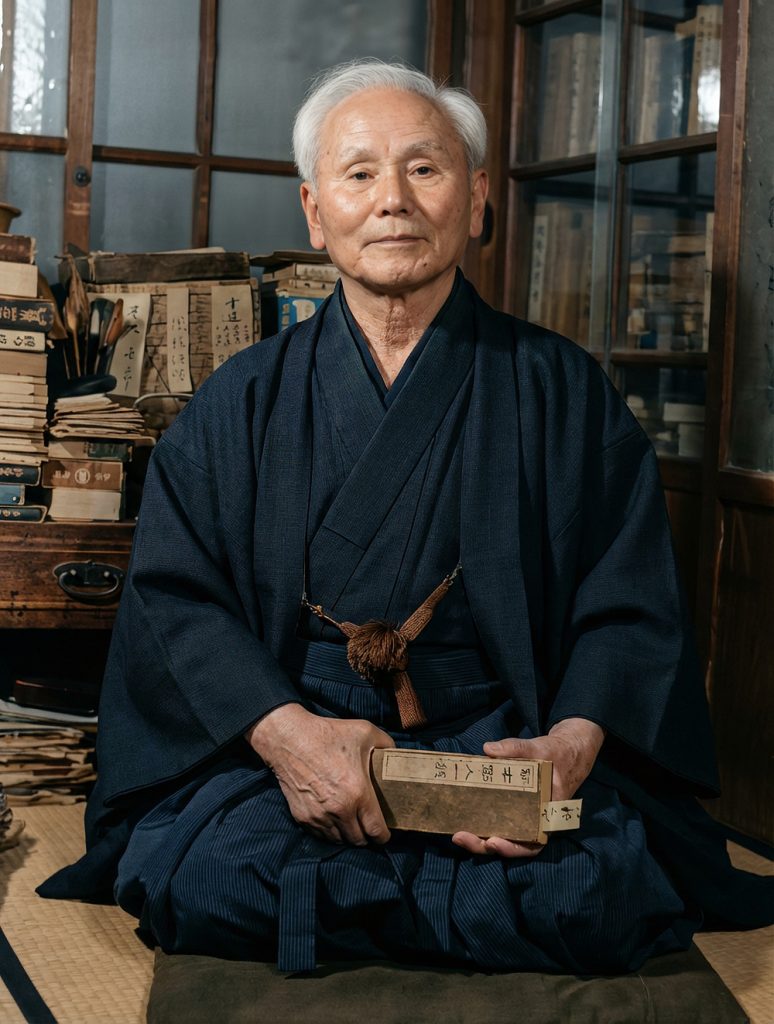
Gichin Funakoshi (1868-1957)
Gichin Funakoshi published details of 40 vital point locations titled ‘Jintai Kyusho’ (Human Body Vital Points) in his 1935 edition of ‘Karate-do Kyohan’.
The charts he used were thought to be based on Densho scrolls from Shindo Yoshin Ryu jujutsu presented to him in Japan by Hironori Ohtuska.
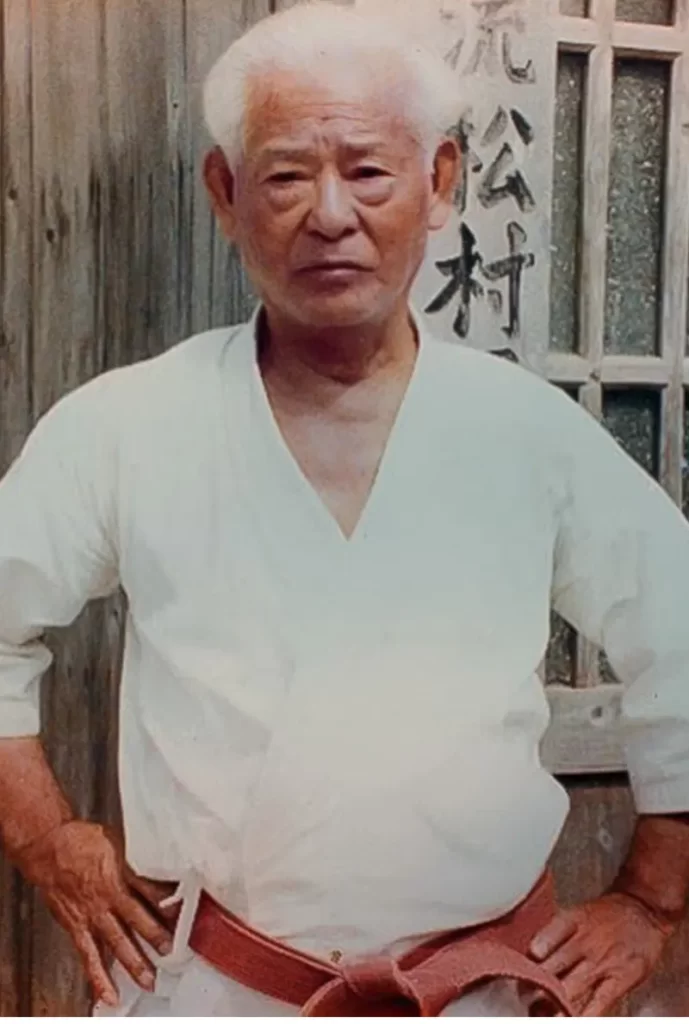
Soken Hohan (1889-1992)
Hokan Soken’s ‘Secret Notes’ are attributed with the re-introduction of kyusho back into mainstream Karate. These notes were given out to U.S. students at the Kadena Airforce Base by Soken’s student and Chief Instructor Fusei Kise, who taught at the base. The notes were apparently translated into English by Kise from Pressure Point charts drawn by Soken.
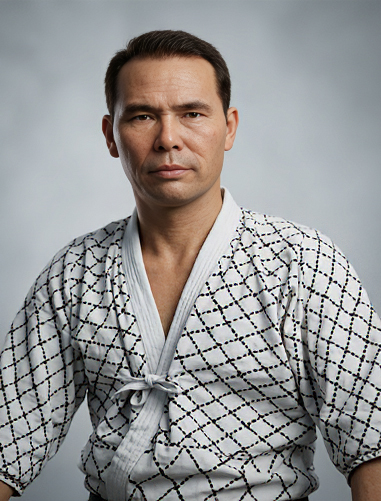
Taika Seiyu Oyata (1928-2012)
Taika Seiyu Oyata is probably more responsible for the popularity of Kyusho Jitsu today than any other practitioner. Oyata learned the art of Kyusho Jitsu from Wakinaguri no Tan Mei, a 6th generation Okinawan whose family migrated to Okinawa from China. Wakinaguri was considered an expert in vital point striking.
Oyata was considered a true master of Kyusho Jitsu and demonstrated the art frequently in the U.S. during the late 1970’s.
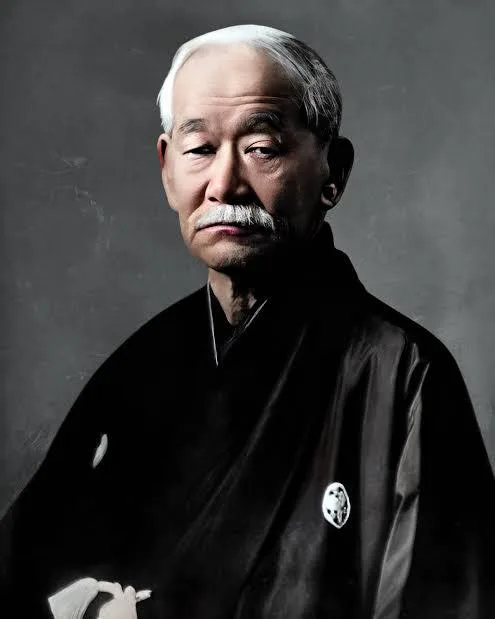
Jigoro Kano (1860-1938)
Jigoro Kano, in his 1931 unpublished work ‘Judo Kyohan,’ complied a chart of 12 vital points called kyusho or ate dokoro, and 23 atemi or body-striking techniques from Tenjin Shin’yo Ryu Ju Jitsu School to create the Kodokan atemi waza (body striking techniques).
Kano incorporated these striking techniques into kata, notably Kime no Kata and Itsutsu no Kata and introduced them alongside Kappo (Resuscitation) techniques.
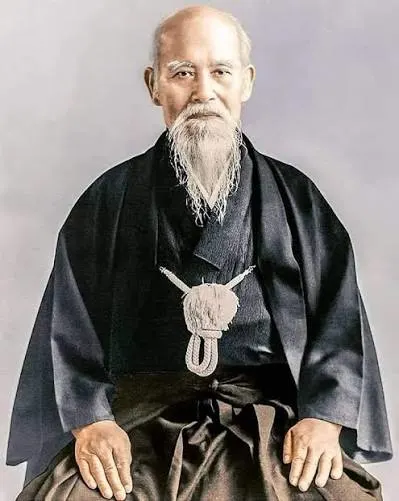
Morehei Ueshiba (1883-1969)
Morehei Ueshiba studied Daito-ryu Aiki Ju Jutsu under Sokaku Takeda from 1915, receiving a teaching certificate (kyoju dairi) in 1922.
The Daito Ryu system included a vast curriculum of techniques, including specific knowledge of kyusho points for striking, joint manipulation and nerve attacks. Specific, detailed lists of the vital points themselves are typically found within the technical scrolls (‘eimeiroku’ and ‘hiden okugi no koto’) of Daito Ryu, which Ueshiba received.
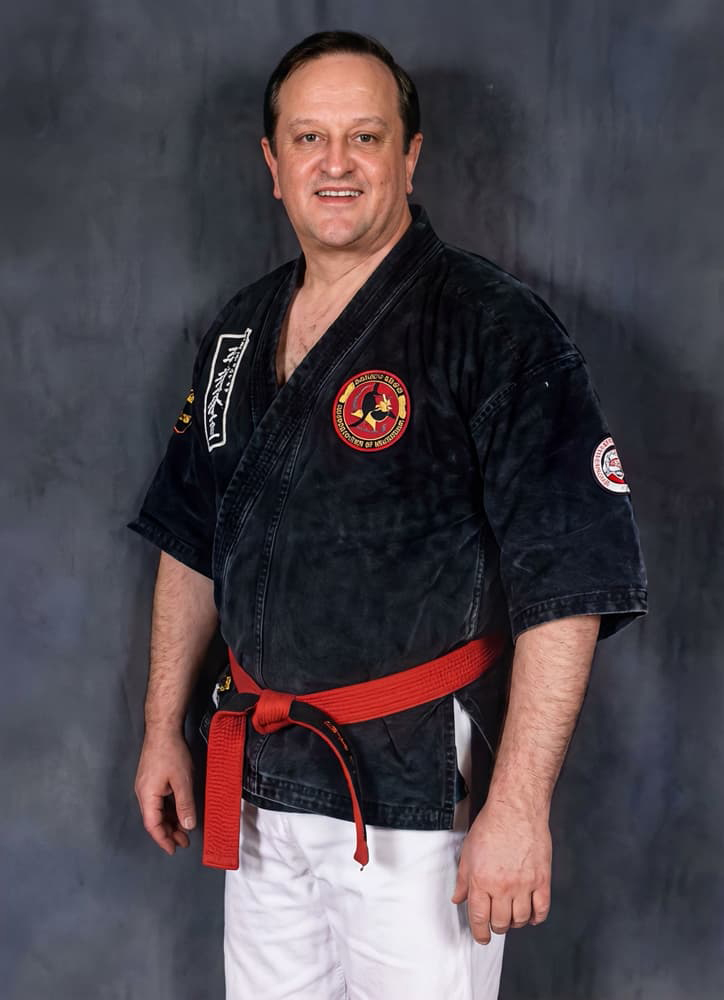
Contemporary revival of Kyusho Jitsu
It was U.S. Karate Instructor, George Dillman, who was really responsible for the revival of Kyusho Jitsu and its widespread re-introduction into Karate. Dillman claims to have learned these techniques from a number of Okinawan Karate masters but the two most responsible for imparting knows he of Kyusho to Dillman were Sokon Hohan & Taika Seiyu Oyata.
Almost every practitioner of kyusho today, certainly as far as Karate is concerned, trace their lineage directly back to Dillman in one way or another.
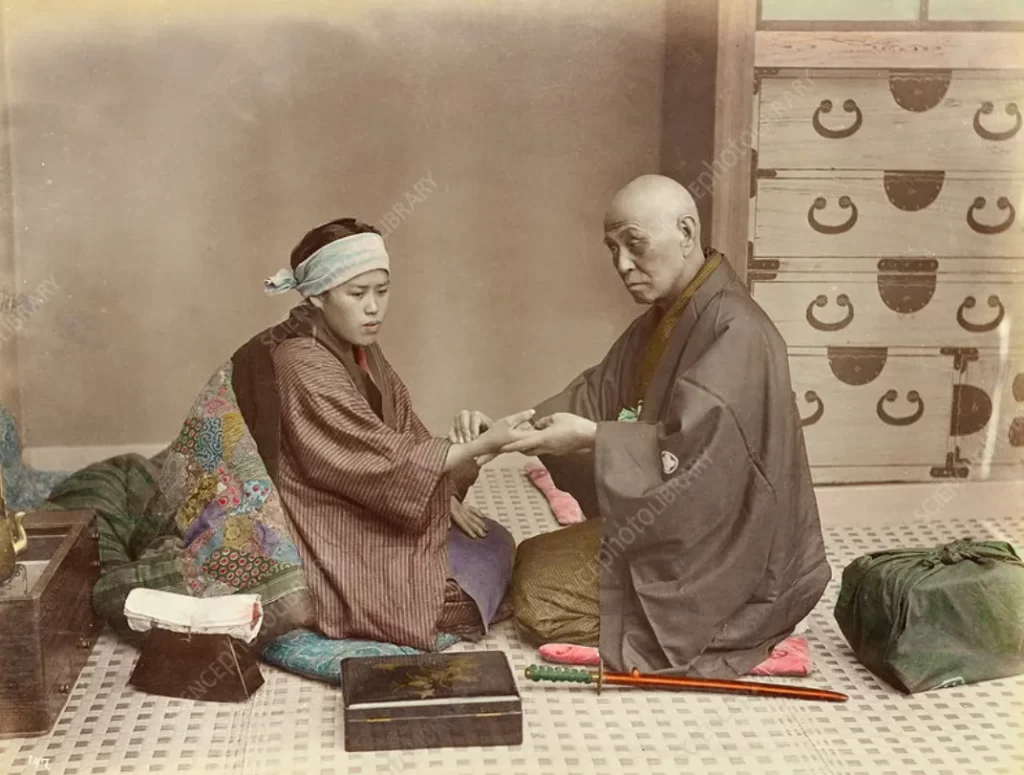
Kampo - Traditional Japanese Medicine
The first medical law of Japan (‘Ishitsu-rei’) was established in 701. It explains the medical system of acupuncture in detail, showing that acupuncture was being administered under the authorisation of the national government. For the next 1200 years, acupuncture continued to be an important facet of public health in Japan.
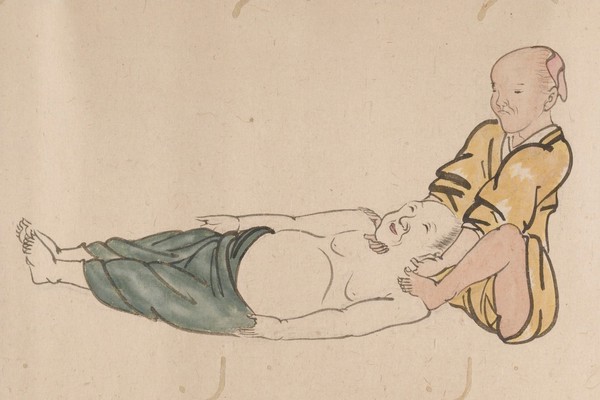
Sekkotsu & Hone-Tsugi or ‘Bone Setters’
Japan did not completely abandon Traditional Japanese Medicine after the Meiji Restoration (1868-1869).
Sekkotsu, the traditional Japanese art of bone-setting had been used to treat wounds, bruises, reduce dislocations and set bone fractures throughout the centuries and continues to be practiced in Japan today.
Sekkotsu developed from the study of injuries in battle. Sekkotsu also taught practitioners how to identify weak points in human anatomical structures and became part of the teaching in many traditional martial arts schools. The application of medicinal herbs, herbal compresses, massage and diet, has always been part of traditional Sekkotsu practice.
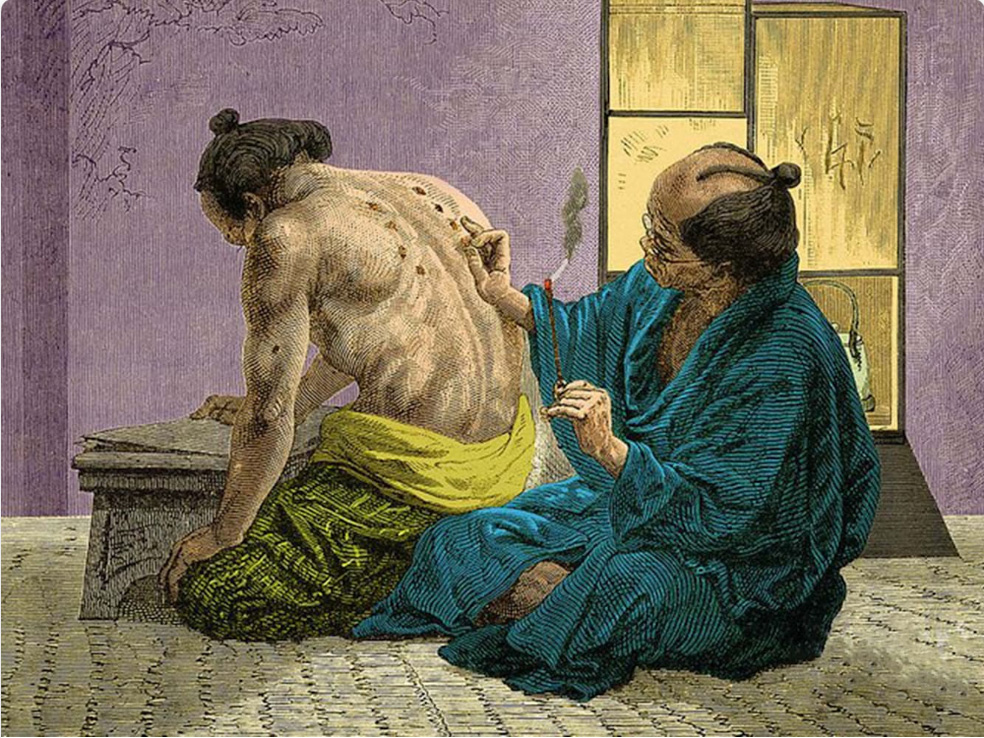
The resurgence of Traditional Japanese Medicine (TJM) or Kampo
Chinese ideas and medicines were a vital part of medical knowledge exchange with Japan, which resulted in the passing of ‘Ishitsu-rei’, the first medical law of Japan in 701.
Following the Edo period (1600-1868) Japanese physicians were exposed to both Dutch and German medicine. In the latter part of this period, interactions with Dutch traders and physicians occurred initially through the port of Nagasaki and the influence of western medicine quickly spread throughout Japan.
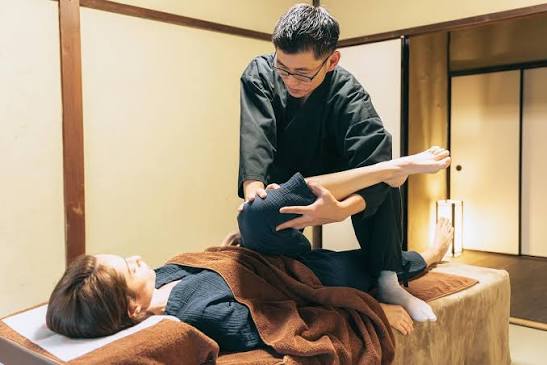
The Revival of Traditional Japanese Medicine
Since 2001, Kampo education has been incorporated into the model core curriculum for all medical students in Japan.
There are an increasing number of clinical trials and scientific studies being conducted to establish an evidence base for Kampo, with research departments and outpatient clinics specialising in Kampo medicine established at many Japanese universities.