Kyusho Jitsu and the Atemi Connection
Atemi Jitsu refers to the general art of applying strikes for self-defense and incapacitation.
Atemi Waza refers to the specific techniques of striking or hitting vital body points.
Broken down, the word atemi means; ate (‘hit’) & mi (‘body’ or ‘person’).
Broken down the word kyusho means; kyu (‘urgent’, ‘sudden’, ‘vital’) & sho (‘place’ or ‘spot’).
Both words are Japanese in origin. Kyusho is the anatomical target being hit, and atemi is the method of striking it.
The term Kyusho Jitsu is a relatively modern term generally attributed to Soken Hohan (1889-1992). In Okinawan karate, the art of striking vital points was expressed in Uchinanchu, the native language of the Ryukyuan islands, as chibudi.
In practice, both are individual but converging striking systems, each with different objectives.
Atemi waza is generally used to distract an opponent before employing a grappling or throwing technique. Ultimately it involves Tai sabaki (body positioning) and Kuzushi (breaking balance) as an integral part of the technique and is a foundational principle in Ju Jitsu systems.
Kyusho Jitsu, by comparison, is used to create immediate damage, often fatal, designed to end a confrontation immediately.
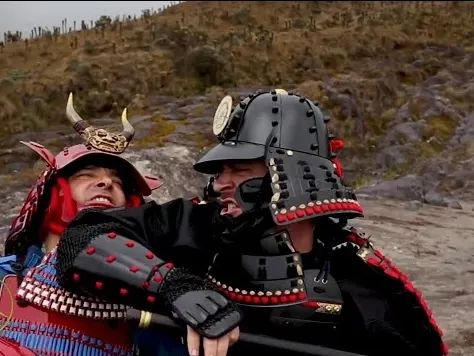
Atemi Jutsu developed during the Sengoku jidai (warring states) period (1467 – 1615) in Japan, when Samurai fought in armour.
Grappling in armour (Yoroi Kumiuchi) relied heavily on exploiting the weaknesses in the armour, usually at the joints where the armour must flex to provide mobility. Consequently, small weapons, particularly Kodachi (short sword) and Yoroidoshi Tanto (armour piercing blade), were used to enter the openings at the throat, joints and armpits when exposed. During this period many of the joint locking and throwing techniques were developed which later became the foundation for Aiki Jitsu and Ju-Jitsu systems.
As the warring states period drew to a close and Japan entered the Tokugawa (Edo) period, grappling in armour was largely replaced by fighting in regular clothing (Heifaku Kumiuchi) and atemi jutsu developed.
Gradually atemi jitsu became more refined and atemi waza began to evolve into Sakkatsu-ho (the arts of killing and revival).
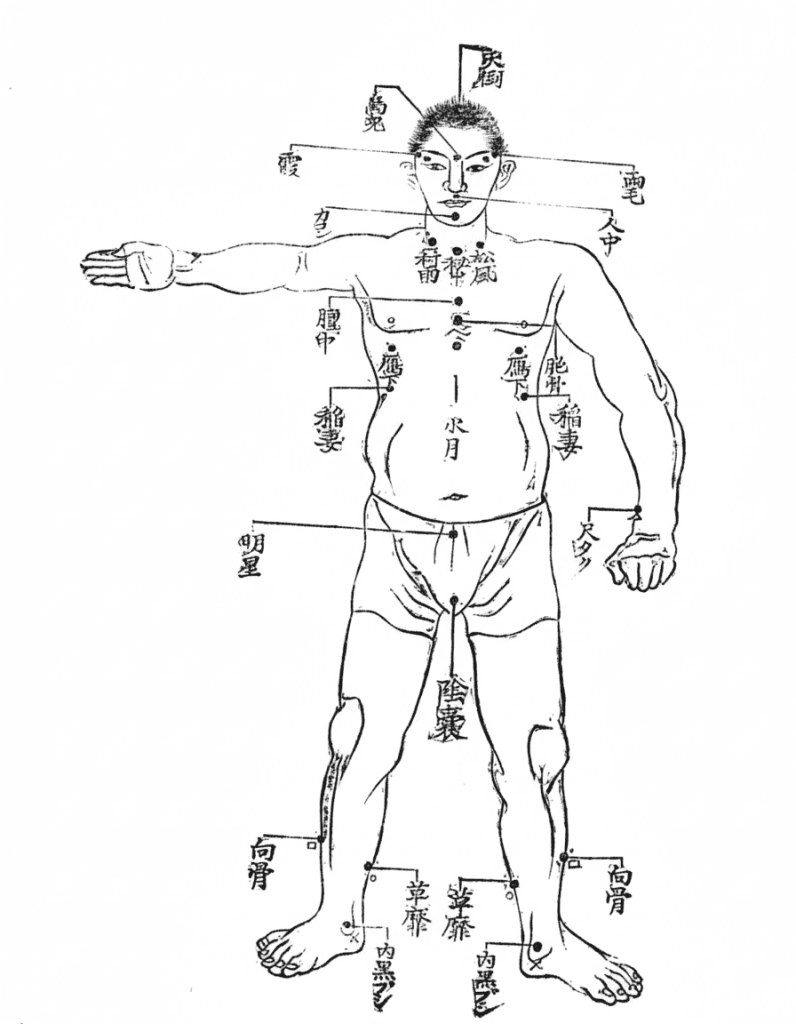
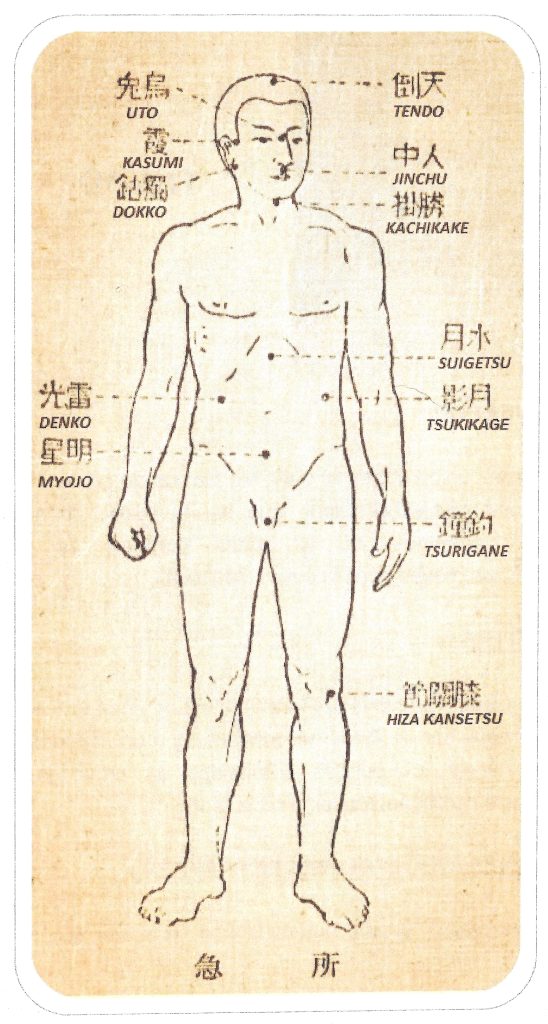
The kyusho points used in atemi jitsu were not originally named using western anatomical nomenclature. They were named using colourful descriptive terminology, often named after the effect of the strike, celestial bodies or symbolic and metaphysical symbols. For example, the striking point for the top of the head was called Toppling Heaven, the striking point for the temple was called Tangled Chrysanthemum and the striking point for the philtrum was called Center of Man.
These techniques were considered secret teachings (Hidensho) and were inscribed in the scrolls (Densho) of old koryu schools, often passed down by each school headmaster (Soke) by oral transmission (Kuden), recorded in oral transmission documents (Kudensho) which were passed onto hereditary, or designated, successors (Isshi siren/yuiju ichinin) selected to protect the school’s integrity who were appointed as custodians of the school’s heritage.
Sakkatsu ho includes the joint study of Sappo (Kill Methods) & Kappo (Life-Giving Methods).
Sappo targeted the acupoints in the body which were called tsubo points by the Japanese. These points developed through the advance of Tradition Japanese Medicine (TJM) or Kampo throughout the Edo period.
Many of the tsubo points targeted in sappo are the same points used in TCM, acupuncture, and moxibustion.
Targeting tsubo points within sappo was often referred to as tsubo-jutsu.
Kappo is considered a broad term involving the study and application of resuscitation methods, while Katsu is considered the application of individual techniques.
A lore formal term for katsu is Katsuho; Katsu (resuscitation) ho (method). This dual concept fits the oriental ideas of yin and yang and the importance of maintaining balance in life.
Akiyama Shirobei Yoshitoki, the founder of Shindo Yoshin-ryu jujitsu’s parent school, Yoshin-ryu, travelled to China in the 17th Century to learn medical sciences, herbalism and diagnostic techniques.
He integrated these techniques into a martial curriculum. This included a knowledge of tsubo points based on TCM, and bone-setting techniques (seikotsu) developed on the battlefield to treat injured samurai warriors.
Yoshin-ryu would ultimately become one of the three largest, most important and influential Ju Jitsu schools of the Edo period. In particular, Yoshin-ryu (specifically the Akiyama line) was the primary foundational ancestor for both Tenjin Shinyo-ryu and Shindo Yoshin-ryu schools. Jigoro Kano integrated the atemi waza and katsu methods from the Tenjin Shinyo-ryu into the Kodokan Judo curriculum.
Shindo Yoshin-ryu was the Ju Jitsu system studied by Hironori Ohtuska, who later go on to create the Wado-ryu system of karate.
Researchers of Japanese martial arts contest the influence of Chinese medical methods on the development of koryu Ju Jitsu systems and many systems developed independently of any direct contact with TCM or Chinese martial arts. Indeed, during the 17th century, Japan’s self-imposed isolation (sakoku) allowed TJM to develop independently of TCM and develop as a system of unique cultural Japanese system of medicine.
The Tokugawa shogunate allowed the Dutch East India Company to maintain a trading post in Nagasaki. This began an era in Japan k own as or Dutch Learning (Rangaku) in which western medical books began to influence the direction of Kampo.
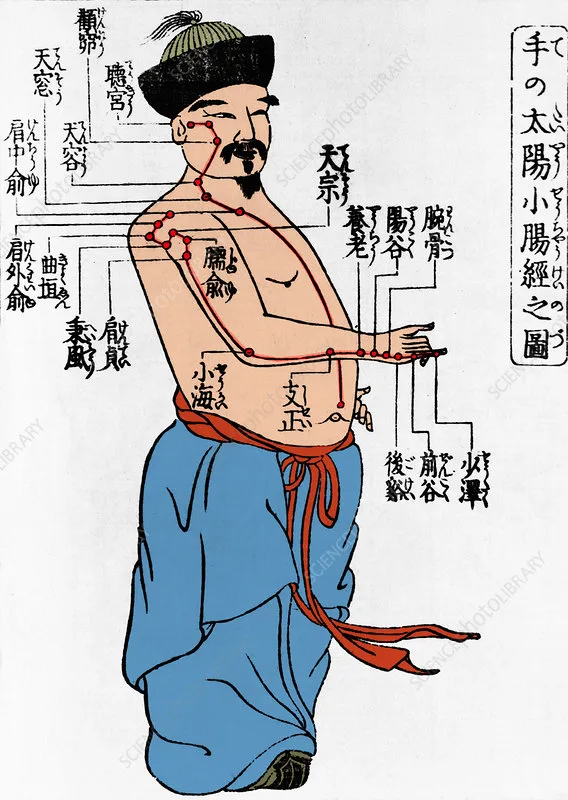
Exchanges with Dutch medical doctors and surgeons led to a westernisation of Japanese medical practices which led to an increased emphasis on diagnostic procedures and western pharmacology and anatomy. Naturally, in turn, this influenced the development of atemi jutsu and the kyusho charts in many Japanese koryu Ju Jitsu schools of the period.
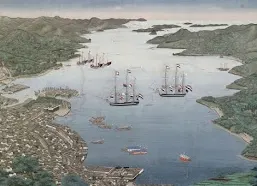
In 1609, the Shimazu clan, from Satsuma province on Kyushu, an island in Southern Japan, invaded the Ryukyu islands and began a period of nearly 260 years of Japanese occupation in which culture integration was inevitable.
The Satsuma clan operated one of the most important martial arts training centres in Japan called the Enbukan (hall for martial arts demonstration/practice). It was central to the rapid spread of specific jujutsu schools within the Satsuma domain, and techniques from schools such as Takenouchi-ryu, Yamanouchi-ryu and Sekiguchi-ryu were taught there.
During the occupation of the Ryukyu islands, the Ryukyukan (Ryukyu House) in Kagoshima, the capital of the Satsuma Domain, served as the official residence and diplomatic office for Ryukyuan officials, traders and emissaries and also served as a training centre for Ryukyuan warriors.
The Shimazu clan were renowned for their expertise in Jigen-ryu Kenjutsu and Ishuin Yashichiro, a notable 19th century Satsuma sword master, was known to have taught Jigen-ryu Kenjutsu to a number of the Okinawan noble class included Soken Matsumura (1809-1899) and Anko Azato (1827-1906), both early karate masters.
Azato was known to have a Menkyo Kaiden (license of total transmission) in Jigen-ryu Kenjutsu. The Motobu Udundī, or Motobu Palace Hand system of tuidi, contains elements of Japanese swordsmanship within its curriculum.
Choki Motobu (1870-1944), one of the most prominent emerging Okinawan karate figures of the late 19th/early 20th century, mentions in his 1932 book, ‘Watashi no karate-jutsu’ (My Art of Karate) the fact that a number of influential Okinawan karate masters were also trained swordsmen.
It’s inconceivable that atemi jutsu and the Sakkatsu-ho methods of Sappo/Katsu were not exchanged with Ryukyuan martial artists, physicians and protectors of the Ryukyuan Royal Household during these exchanges. Or that they subsequently influenced the development of Okinawan martial arts.
Following Commodore Matthew Perry’s 1853–1854 expedition, which forced Japan to end over 200 years of isolationism, western medicine was rapidly introduced into Japan.
After the Meiji Restoration in 1868, the new government officially adopted German medicine as the model for the national medical system, establishing the University of Tokyo Medical School in 1877.
In 1874 the Japanese government established a medical license system that mandated education in Western medicine, effectively side-lining TJM (Kampo). By 1883, new regulations required all medical practitioners to pass an examination based on Western medicine, cementing its role in Japan’s modern healthcare system.
It’s shortly after this period that many of the old Koryu Ju Jitsu Densho scrolls, featuring kyusho locations, are translated from their original poetic descriptions into the Japanese equivalents for modern western anatomical descriptions.
Dr. Kenji Osawa Kenji (1852–1927), a Doctor of Medicine and professor at the University of Tokyo, was one of the first Japanese medical doctors to examine many of the methods described in the Densho scrolls of the Tenjin Shinyo-ryu and Yoshin-ryu koryu schools.
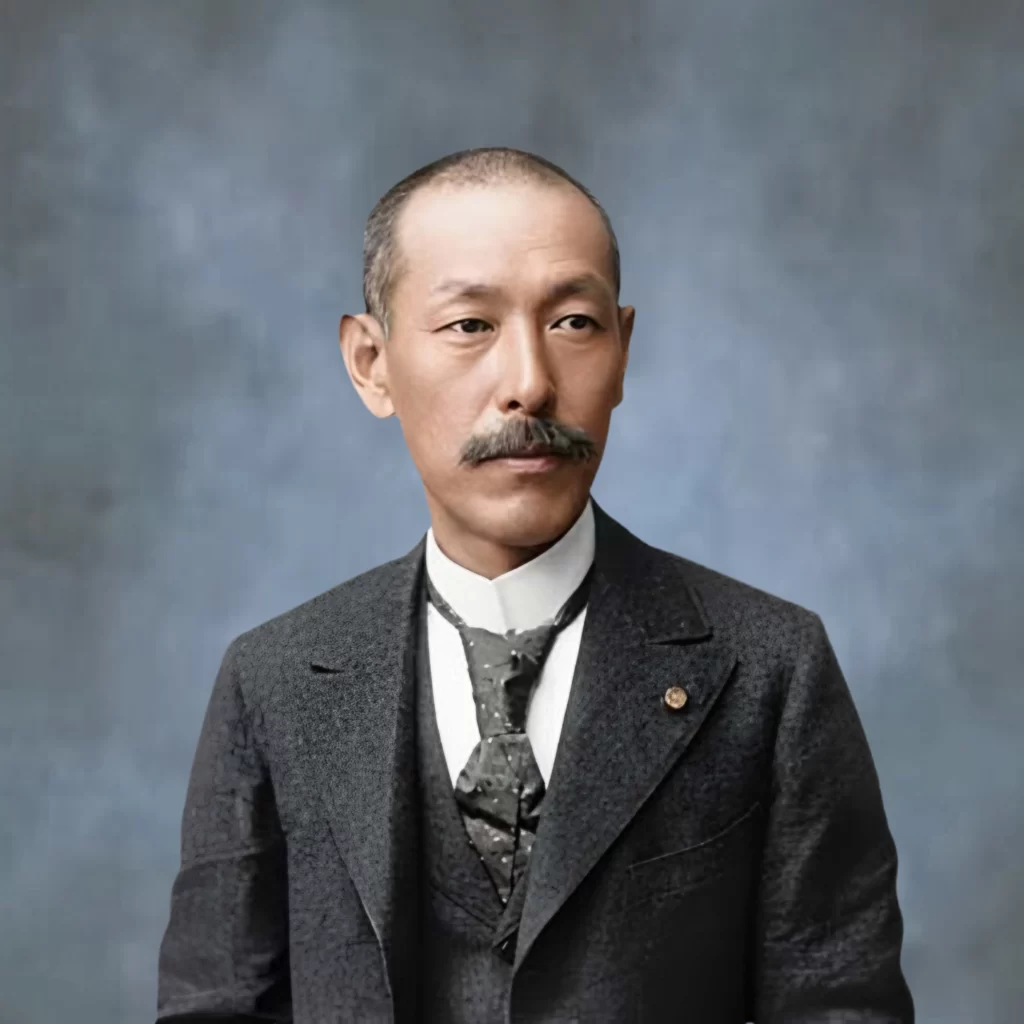
Osawa examined 20 specific kyusho points, and their corresponding katsu methods. Although minor differences exist between different jujitsu schools, of the 40 common vital points recorded, 21 are considered ‘instant death’ points (sokushi) and 19 are ‘instant fall’ points (sokuto). Most of these methods were tsubo points.
With the establishment of the Kodokan in 1882, Jigoro Kano reduced over 40+ points studied from these old Ju Jitsu charts to just 12 points.
The 12 points he listed focused on the core ‘instant fall’ points, removing the ‘instant death’ points from the Kodokan curriculum.
Early, detailed charts and techniques regarding these points were included in early Kodokan literature, together with descriptions of 22 atemi waza strikes to disable opponents.
The inclusion of katsu was introduced to foster trust among students and cultivate acute safety awareness amid the physical intensity of unrestricted randori (free practice).
Kano’s approach revolutionised the practice of atemi Jitsu for the 20th century.
In 1899, Kano was asked to chair a committee for the Dai Nippon Butokukai (Greater Japan Martial Virtue Society) to draw up the first formal set of contest rules for jujutsu/judo. These rules, which were heavily influenced by the Kodokan’s approach to safety, officially excluded atemi-waza from competition, favouring throws (nage-waza) and grappling (katame-waza) techniques, restricting atemi waza to kata (prearranged forms) practice.
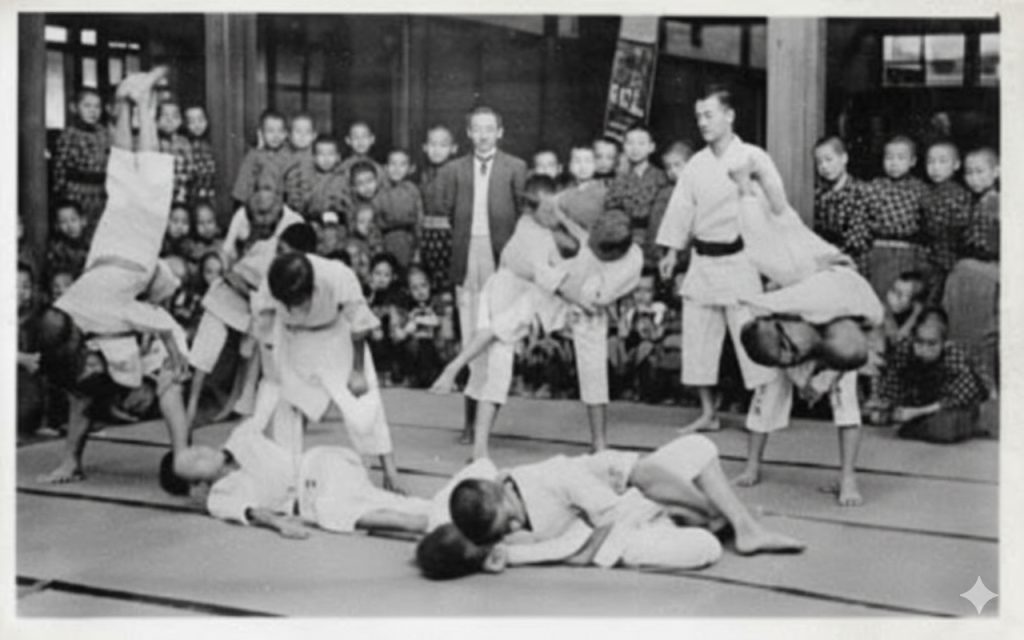
Judo was introduced into Japanese after school programs shortly after the establishment of the Kodokan, as a method of physical and moral education and formally adapted into the national curriculum in 1906.
Okinawa formally became a Japanese prefecture after the Meiji restoration in 1987 and was formally annexed to Japan.
It’s difficult to overstate the impact Kano had in introducing Judo into the Japanese state education system. It’s hard to imagine that this didn’t leave a significant impression on the forerunners of modern karate.
Anko Itosu’s introduction of karate into the Shuri Jinjo Elementary School as a method to promote physical education in 1901 and his subsequent 1908 letter to Japan’s Ministry of Education and Ministry of War, to introduce karate into the national curriculum, is doubtlessly following Kano’s example.
Judo had already entered the national curriculum in 1906. Itosu would have been aware of the atemi waza of judo and subjected to the modernisation of western anatomy into the national medical system.
Gichin Funakoshi, a student of Itosu, trained in both classical Chinese and Japanese philosophy, and became an assistant teacher within the Okinawan public-school system in 1888. He also would have witnessed the introduction of Judo into the national teaching curriculum and the modernisation of the Japanese national medical system.
It’s difficult to imagine he wouldn’t have familiarised himself with the atemi waza of judo, and in the attempt to modernise karate, make it suitable for introduction into the national curriculum also. This would logically have included the adoption of Kano’s atemi waza to replace the more dangerous and fatal vital points described in the Bubishi.
No longer an open ‘secret’, the late 19th/early 20th century saw an increased interest in Japanese martial arts and a number of books appeared on the market to satisfy the public appetite for information. Most of these featured vital point charts and methods of attacking them.
It’s difficult to imagine that early karate. Masters such as Itosu and Funakoshi wouldn’t have been aware of these books and charts or Kano’s revised atemi waza methods within the national curriculum, nor that they wouldn’t have adopted them into their karate practice as part of their own modernisation of karate.
In 1917, and again in 1922, Funakoshi was invited to demonstrate karate in Japan by the Ministry of Education. After his 1922 visit, he remained in Japan to teach karate, predominantly through the education system, and established the first university karate clubs in Japan.
Funakoshi ultimately followed very similar goals to that of Kano, by promoting karate as method of physical fitness, perfection of character, moral education and etiquette, rather than purely as a martial art.
During this period atemi waza seems to have faded considerably from both Kano’s and Funakoshi’s teaching methodologies and became a mere footnote, resigned largely to publications, of both arts.
During his 1922 visit, Funakoshi was invited by Kano to give a demonstration of karate to instructors at the Kodokan.
Shinken Gima (1896-1989), a young Okinawan university student, and a student of both Kano and Funakoshi, accompanied Funakoshi in his demonstrating at the Kodokan.
Funakoshi performed Koshokun Kata (Kushanku/Kanku-dai) and Gima performed Naihanchi Shodan kata.
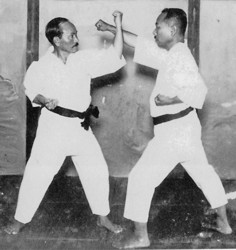
Gima believed Kano saw the joint benefits of practicing kata as a safe method of combining atemi waza practice with the benefits of physical fitness and integrated those principles into the Seiryokuzenyo Kokumin Taiiku no kata (Maximum Efficiency National Physical Education Kata) which he developed in 1924.
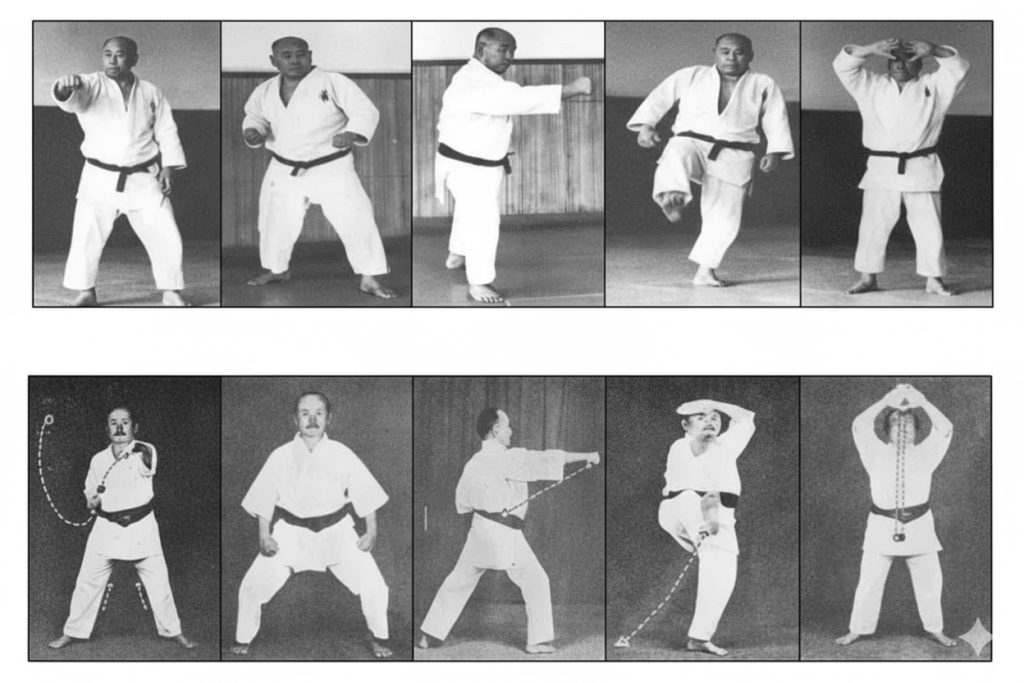
The Seiryoku Zenyo Kokumin Taiiku no kata (often abbreviated to SZKT) is a relatively simple form which includes 26 solo movements and 20 paired exercises based on atemi waza.
In 1928, Kano encouraged high-ranking students to continue researching atemi waza to ensure the self-defense aspect of Judo was not forgotten.
In 1944, the Dai Nippon Butokukai, reversed its decision to remove atemi waza from the national curriculum, a decision probably influenced as a result of Japan’s inclusion in the Second World War, and a number of publications were produced for elementary school pupils to teach them atemi jutsu.
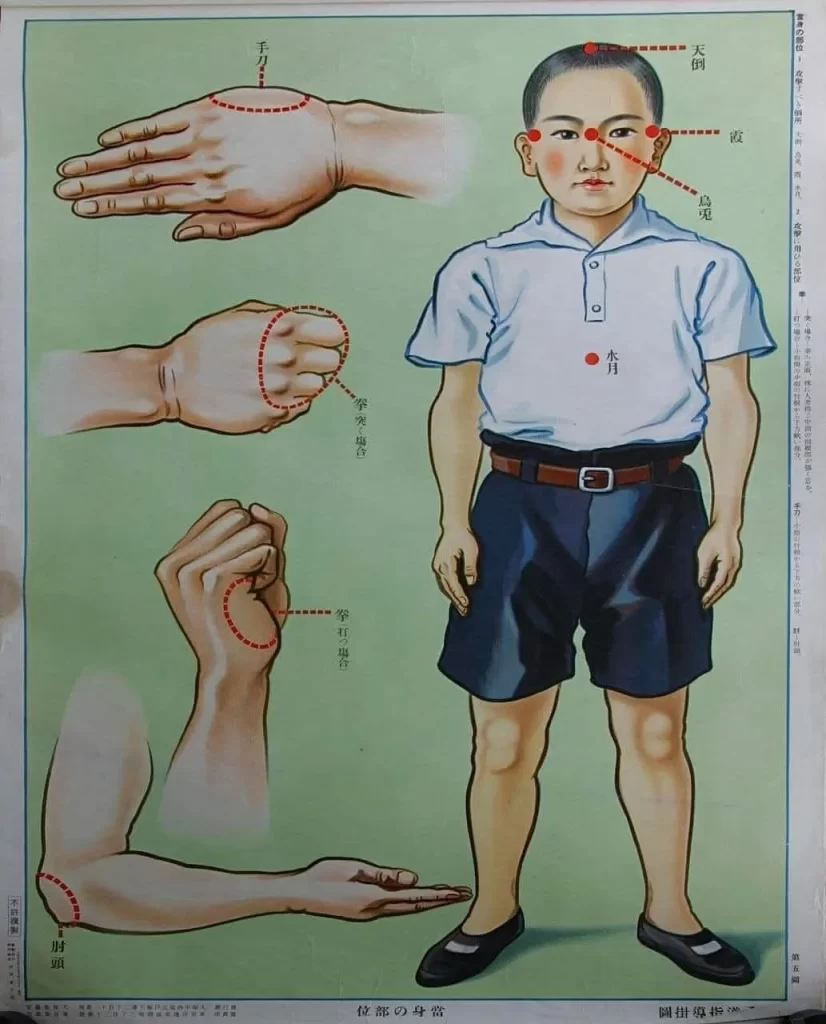
The art of atemi jutsu in karate, converged with kyusho jutsu to became primarily a system for distracting or stunning an opponent prior to the application of a follow up technique, such as a joint lock or throw, in the same way it developed historically on the battlefields of Japan.
Atemi jitsu is practiced within the Kyusho jitsu Kenkyukai alongside kyusho Jitsu.