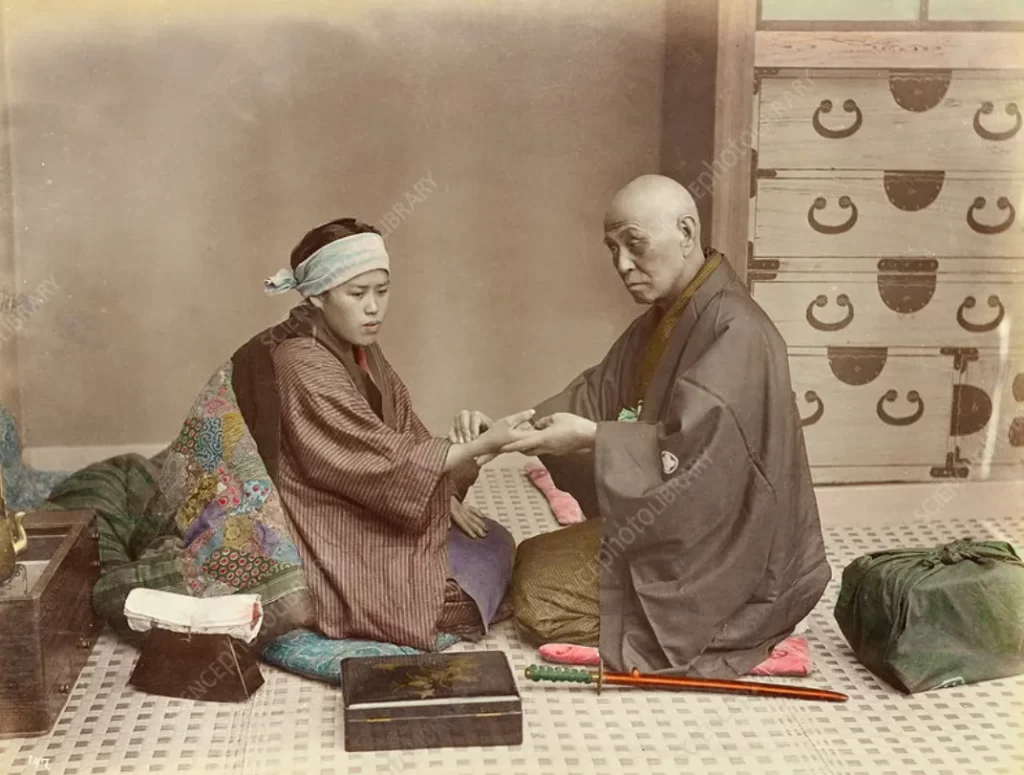
The first medical law of Japan (‘Ishitsu-rei’) was established in 701. It explains the medical system of acupuncture in detail, showing that acupuncture was being administered under the authorisation of the national government. For the next 1200 years, acupuncture continued to be an important facet of public health in Japan.
Chinese ideas and medicines were a vital part of this knowledge exchange with Japan. Chinese medicine included the five skills composed of herbal medicine, acupuncture, moxibustion and massage.
By the 6th century, Japan’s medical system, Kampo, developed independently from ancient Chinese medicine practice. Over the years, the natural features of Japan transformed these medicines into a practice that was uniquely Japanese.
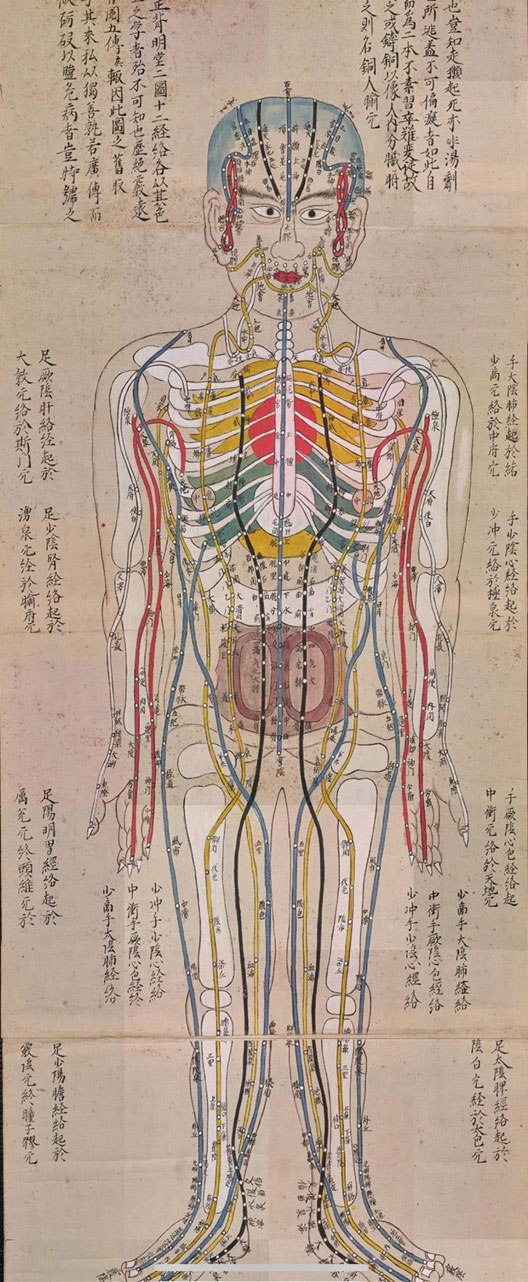
When reading Funakoshi’s ‘Karate Do Kyohan’, he makes reference to the Bubishi and clearly had knowledge of TCM as he mentions both the Shichen theory (Diurnal Cycle) of TCM and ‘Moxa Cautery’, the Chinese science of applying heated needles to acupuncture sites. A science based on TCM, acupoints & meridians.