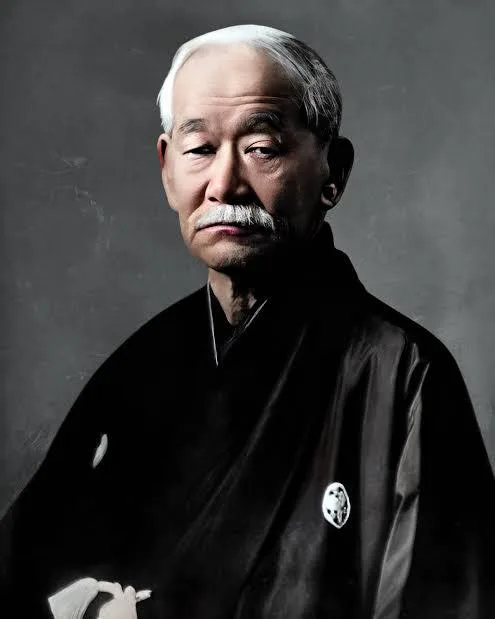
Jigoro Kano (1860-1938)
Jigoro Kano, in his 1931 unpublished work ‘Judo Kyohan’ complied a chart of 12 Vital Points called kyusho or ‘ate dokoro’ and 23 body-striking techniques from Tenjin Shin’yo-ryu Ju Jitsu School to create the Kodokan atemi waza (body striking techniques).
Kano incorporated these striking techniques into kata, notably ‘Kime no Kata’ and ‘Itsutsu no Kata’ and introduced them alongside Kappo (Resuscitation) techniques.
These techniques can be traced back through both Tenjin Shinyo-ryu & Shin no Shinto-ryu Ju Jitsu to their parent school; Akiyama Yoshin-ryu, where both killing methods and revival methods are related directly to both TCM and western medicine.
As Japan opened up and westerners began studying Kano’s Judo at the Kodokan, many went on to teach the U.S. & British Military, during both WW1 & WWII, introducing Kano’s Ju Jitsu into the hand to hand combat training which traditionally taught sabre, bayonet fighting and boxing.
Part of the techniques transferred from Kano’s judo system included atemi waza and kyusho striking point techniques. Eventually these techniques were studied by the U.S. Armed Forces Medical Examiner and a board of forensic pathologists from the Armed Forces Institute of Pathology (AFIP) to determine their effectiveness against an opponent.